
Auburn Hills Resident Lookup Coverage
A responsible Auburn Hills resident lookup uses several record systems because none is a complete people list. Start with the question being tested: ownership, a dated address, voter-registration status, a public court case, a life-event clue, or a historical household. Then use the custodian that keeps that record. The strongest result has a clear source, date, location, and role. It also states what the record cannot establish, especially the difference between ownership and occupancy.
| Record | What it can confirm | Where | Access |
|---|---|---|---|
| Parcel and tax roll | Owner of record, parcel, situs or mailing distinction | Auburn Hills BS&A and county gateway | Online reference data, not occupancy proof |
| Deed index | Grantor, grantee, instrument, date, legal description | Oakland Super Index | Indexed search is free; image or copy charges may apply |
| Voter record | Limited registration fields and status | Michigan Vote, QVF, clerk | Protected fields are withheld |
| Court case | Party role, case number, type, register when public | 52-3, Court Explorer, Probate, MiCOURT | Protected-category exclusions and copy rules apply |
| Vital record | Marriage, death, divorce, or birth event clue | Oakland County and MDHHS | Eligibility, age thresholds, ID, fees, and timing apply |
| Directory or census | Dated address, household, or obituary clue | OCPHS, libraries, National Archives | Archive access and coverage gaps apply |
Use a current parcel route for an address question and an archive route for an older household. An official role in a filing is not, by itself, a current Auburn Hills presence.
Start an Auburn Hills Resident Lookup With Record Keys
A record key narrows a same-name problem before a name search begins. For a present address, search Auburn Hills BS&A or the Oakland County Property Gateway to establish the parcel number, situs address, municipality, legal description, and map position. Then search the Oakland deed Super Index by parcel number and party name. The deed supports a title relationship, not an assertion that a party lived there.
- Preserve the address as written, including directional prefix, suffix, unit, ZIP, and historic locality.
- Resolve the parcel or PIN and record the map position and legal description.
- Search the deed index for the PIN, party names, instrument type, and date.
- Check a directory, census, newspaper, cemetery, or historical-society record for the same address and period.
- Use a court, voter, vital, license, or correctional record only when it answers the specific public question.
- Label the outcome exact key, strong multi-source correlation, possible match, or unresolved.
Historic place names matter. Auburn Hills incorporated in 1983, so older sources may read Pontiac Township, Auburn Heights, Auburn, or Amy. A modern city name should not be imposed on an older index entry.
Note: Address plus date plus record role is safer than a name-only match.
Auburn Hills Court Records by Name
Court records should be searched by the court that fits the matter and then verified from the official file. Auburn Hills routes local matters through 52-3 District Court, while Oakland County’s 6th Circuit uses Court Explorer. Court Explorer can search by case number or party name and exposes case-type filters for domestic, civil, and felony criminal matters. Its online coverage reaches back to the early 1990s. A result should be checked against the case number, court, filing date, and party role before it is connected to a resident.
| Search inputs | Case number or party name, then the available case-type filter. |
|---|---|
| Result fields | Case number, party names, attorneys, register of actions, and document links when public. |
| Verification fields | Court and division, filing date, party role, event date, disposition, and document identifier. |
| Copy route | Regular copies are listed at $1 per page; certified copies add $10 per case. |
Oakland Probate has a free name search but no online documents, so the court or mail-copy route is the fallback. MiCOURT is informational rather than an official court record, excludes several protected categories, and may apply a seven-year criminal-search filter. The Eastern District of Michigan is the appropriate federal venue; PACER has account, fee, and courthouse-terminal rules.
Verify an Auburn Hills Resident Lookup
Verification means testing one bounded claim across sources. For example, a directory or parcel clue can establish an address and time, while a deed can identify instrument parties and a court register can identify a public case party. Do not merge those roles. The research records that Court Explorer warns against identity assumptions, and a name match becomes useful only after the case number, jurisdiction, record date, and source warning are retained.
- Anchor the name to an address, parcel, directory year, or other dated source.
- Search spelling variants in the court or index that corresponds to the record type.
- Compare the court, party role, filing date, instrument, and jurisdiction with the anchor record.
- Use a vital-record index or official copy route only when an event date or relationship must be verified.
- Request the official file, register, or certified copy when a web index is incomplete or material.
- Docket
- The court’s running case record, often listing filings and events by date.
- Index versus image
- An index points to a record; an image is the underlying scanned page or document and may have different access rules.
- Certified copy
- A copy issued by the responsible custodian with its official certification, subject to that office’s eligibility and fee rules.
For an older address trail, the Auburn Hills city directory supplies the historical directory collections instead of treating a current record as proof of an earlier household.
Auburn Hills Resident Lookup and QVF Limits
Michigan Vote is an address and registration-status route, not a general people directory. The state says Michigan does not register voters by party. The public QVF framework can include complete name, residential address, mailing address when available, year of birth, registration date, status, voter ID, jurisdiction codes, and requested participation history. It does not disclose ballot choices. Phone, email, month and day of birth, driver-license or state-ID number, digitized signature, and the last four Social Security digits are protected.
The Michigan Vote registration guidance directs current lookup questions to the state and local route. A data-file request uses the Michigan QVF FOIA form, which requires one geographic scope and requester and delivery details. It permits statewide, county, jurisdiction, district, school, village, ward, and precinct choices, with delivery by pickup, arranged FTP, or mail.
The Auburn Hills City Clerk can help with registration and polling questions. Requests for a QVF data file belong with MDOS, and public fields must not be represented as a full personal profile.
Note: A registration record can be public while protected fields in the same system remain unavailable.
Auburn Hills Vital-Record Routes
There is no separate Auburn Hills registrar identified as the statewide issuing source. The city route directs requesters to Oakland County or the county where the event occurred, and MDHHS Vital Records issues certified statewide birth, death, marriage, and divorce records from 1867. Orders may be made by mail, online, phone, drop box, or appointment. The live state page should be checked before an order because fees and processing can change.
Birth records under 100 years have restricted certified-copy eligibility under MCL 333.2882. Birth material is generally public after 100 years for the certified-copy rule, while MCL 333.2885 uses a separate 110-year threshold for birth material transmitted for genealogy use. Marriage, death, and divorce material has a 75-year transmission threshold in that genealogy provision. Do not merge these rules. Oakland County’s marriage and death genealogy search can help locate local material, but it does not replace the county or state copy route.
Record an Auburn Hills Resident Lookup Card
A small record card preserves the evidence without expanding a clue into a claim. It should transcribe what the custodian or historical source actually says and make a contradiction visible. This approach is especially useful with recurring Pontiac-area surnames and with records created before Auburn Hills became the municipal name.
- Person name exactly as the source prints it, plus a noted spelling variant.
- Source date and the exact address or locality as printed.
- Record type and the person’s role, such as owner, grantee, directory listing, or case party.
- Municipality or court jurisdiction, source URL, page or record number, and retrieval date.
- Confidence label and any contradictory source or unresolved gap.
Do not copy a full birth date, private phone or email, state-ID number, Social Security data, protected voter data, or confidential address into a research card.
Auburn Hills Archive Name Search
When the person appears before 1983, an archive can be the only sound route. The Oakland History Center holds directories, censuses, land and tax material, obituary files, and local research holdings. The Auburn Hills Historical Society archive holds local maps, Pontiac Township tax records, school records, house and building information, newspapers, and census material by appointment. Use the historic place name and road, then compare a dated directory, census, deed, or cemetery source rather than assuming a present-day city search will find the person.
The National Archives makes federal population schedules through 1950 public, but the latest public census is 1950 because of its 72-year restriction. A census is a time-bounded household snapshot, not evidence of a current Auburn Hills address.
Auburn Hills License and Filing Checks
A regulatory or filing record can confirm a public role, not a residence. The state professional-license portal is the official route for license status and complaints; its live verification is the place to check a date and status. Michigan’s MiBusiness Registry can be searched by entity, individual, ID, or filing number, with match modes such as begins with, exact match, keyword, and Soundex. Oakland assumed-name records, UCC filings, city license categories, and the chamber can provide separate, labeled leads.
Keep the source’s role and date with the result. A corporate officer, registered agent, credential holder, or chamber member is not thereby shown to be an Auburn Hills resident.
Auburn Hills Resident Lookup Limits
Michigan Freedom of Information Act, PA 442 of 1976, MCL 15.231 et seq., begins with public access but allows exemptions and redaction. A request should be narrow enough for the custodian to locate records and separate protected material. The Michigan Address Confidentiality Program provides substitute-address and mail-forwarding protections for eligible people facing harm. A resident lookup must not attempt to defeat those protections.
The Michigan State Police ICHAT scope page explains that its name-based results cover qualifying Michigan felonies and serious misdemeanors reported by the counties, with exclusions including federal, tribal, traffic, juvenile, local misdemeanor, other-state, suppressed, and warrant material.
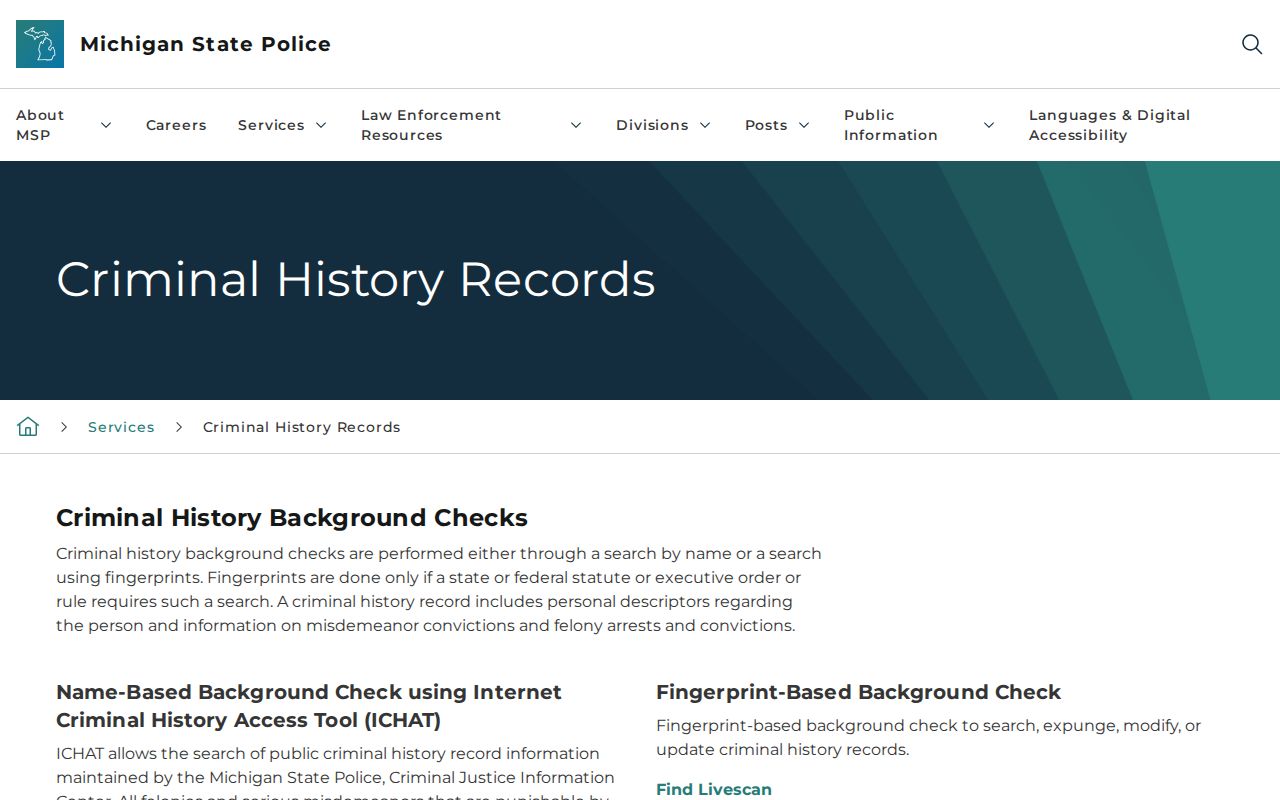
That scope warning means a name result is not a complete history, a conviction conclusion, or proof of a current address.
The MDOC OTIS supervision search covers people under Michigan supervision and people discharged within three years, but excludes county and city custody, unsentenced people, older discharges, and exempt records.
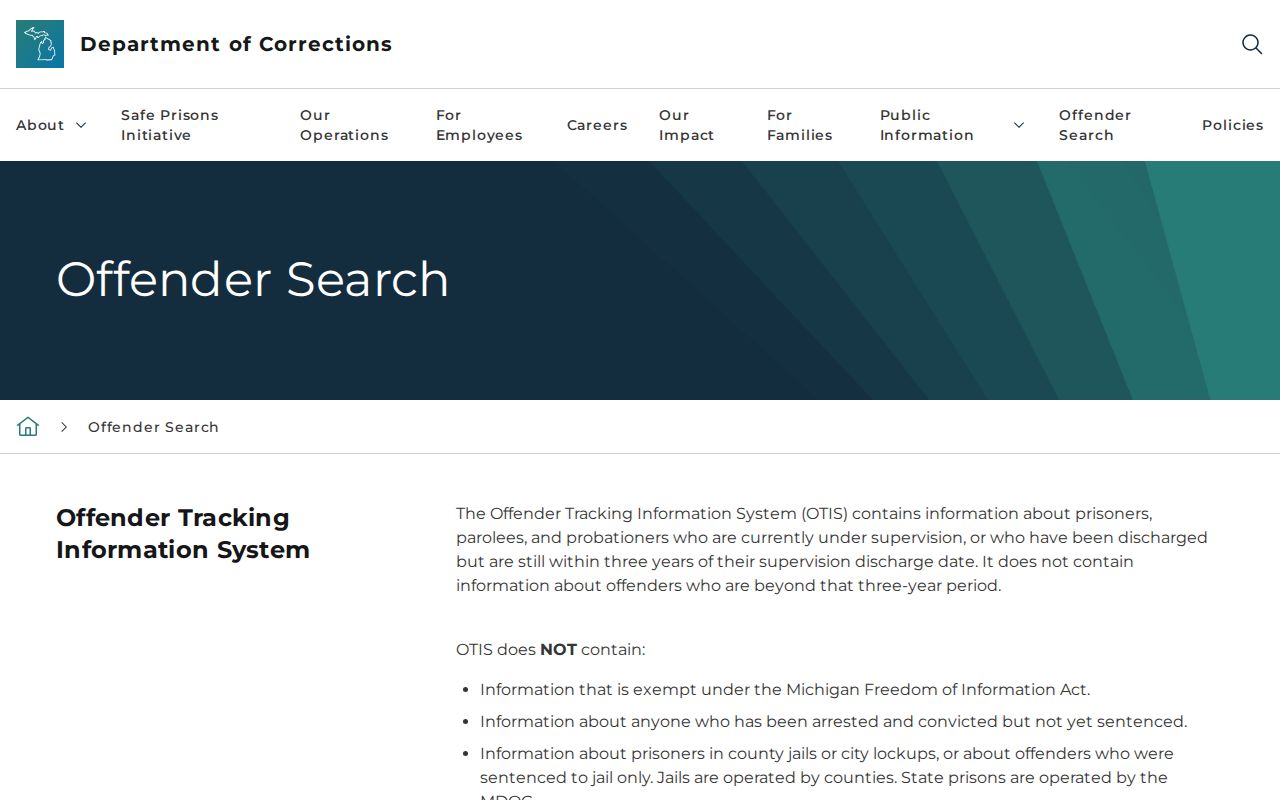
Use the responsible office when the public record matters, and retain its limit with the result.
Lawful use. Use Auburn Hills records for lawful, bounded research. Michigan’s anti-stalking statute, MCL 750.411h, prohibits repeated harassment; never use records to locate, monitor, intimidate, threaten, or harm another person.