
Auburn Hills Historical Directory Shelves
Auburn Hills did not incorporate until 1983, so the useful historical shelf is broader than a modern municipal title. The Oakland County Historical Society’s Oakland History Center at Pine Grove holds Pontiac and county directories that can contain Auburn Heights and Pontiac Township entries. The collection also joins address books to land, tax, census, cemetery, and obituary material. Record the title, year, publisher, and page for every hit. Those details make it possible to return to the original volume when a spelling, street, or household changes.
| Collection | Years | Where held | Access |
|---|---|---|---|
| Pontiac-Flint directories | 1860-61; 1870-71 | Oakland History Center | In-person shelf and research access |
| Pontiac and Oakland County directories | 1886; 1895-1915 selected years | Oakland History Center | Closed-stack, call ahead |
| Polk's Pontiac City Directory | 1922-1962 selected runs | Oakland History Center | Name, address, and business research |
| Street, telephone, and rural-route guides | 1919-1944 selected runs | OCPHS and Library of Congress | Some material is in person only |
| Criss-cross and reverse directories | 1958, 1960, 1967-68; 1972-83 with gaps | OCPHS and Library of Congress | Address-to-name route |
The OCPHS directory shelf list identifies the actual volumes rather than assuming every year survives.
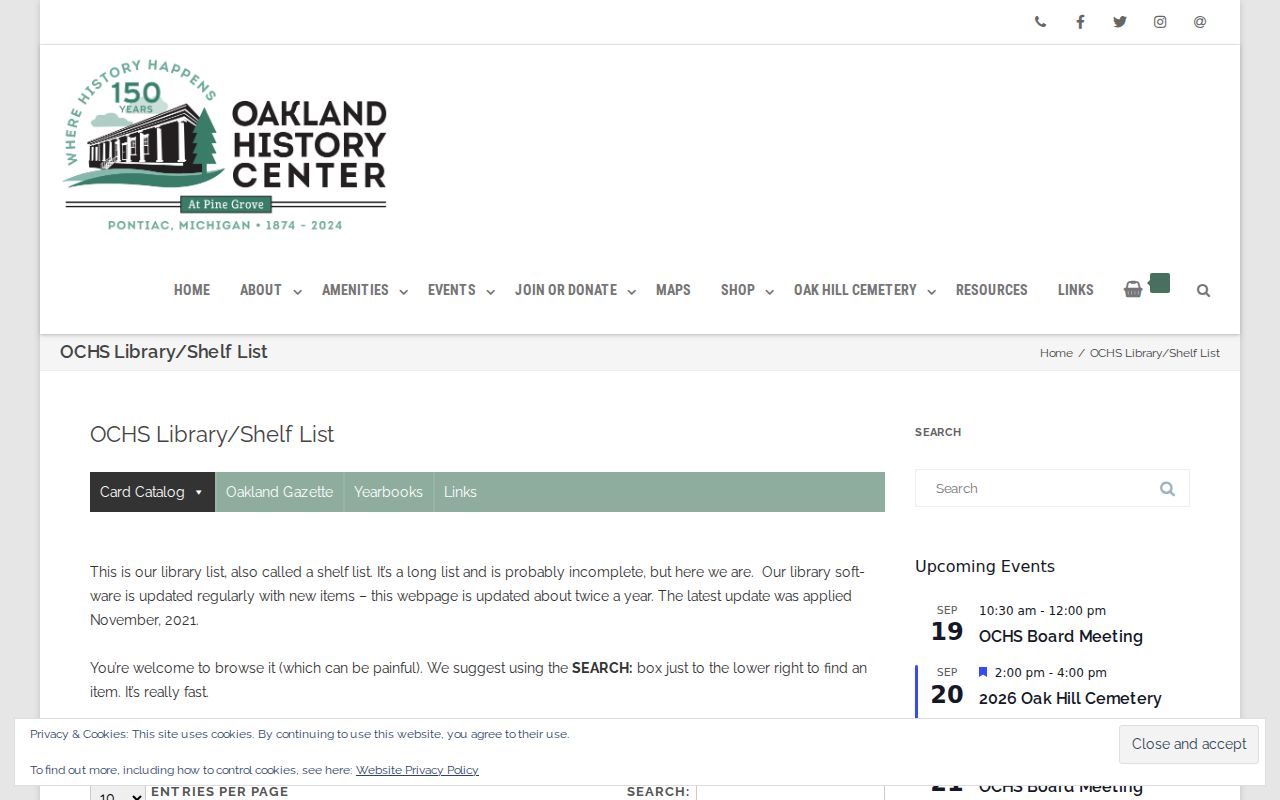
Its year-by-year listings help distinguish a missing entry from a missing volume, a changed place name, or a directory issued for a different exchange area.
Note: A directory listing is a dated clue, not proof of current residency or ownership.
Names Before Auburn Hills Directory Years
Place names are the key to an Auburn Hills historical-directory search before incorporation. The research trail may use Pontiac Township, Auburn Heights, Auburn, or Amy. A 1962 Polk's Home Directory for Pontiac is especially useful because its description says it includes Auburn Heights, Keego Harbor, and Sylvan Lake. Preserve the printed locality rather than replacing it with a modern label. Then compare the road and parcel with later records.
The Auburn Hills Historical Society archive adds appointment-based access to local maps, Pontiac Township tax records, school material, newspapers, house information, and census material from 1830-1870. Its reprinted Pontiac Township 1827-1983 history supplies the jurisdiction bridge that a directory title cannot supply by itself.
Do not backdate Auburn Hills into a nineteenth-century result. Write down the older locality, the modern equivalent, the record date, and the source.
Auburn Hills Directory Research Desk
The Oakland History Center at Pine Grove, 405 Cesar E. Chavez Avenue in Pontiac, is the main local stop for these historical directory volumes. Published research hours are usually Tuesday through Thursday from 11 a.m. to 4 p.m., and the society recommends calling first. The center keeps family and township histories, gazetteers, marriage and cemetery publications, land and tax material, Oakland County censuses for 1845 and 1860, Civil War material, obituary card files, and scrapbooks alongside its directory runs.
The shelf is more varied than its main title suggests. It includes a 1930 Greater Pontiac Polk's Official Arrow Street Guide, a 1919 rural-route directory, Pontiac telephone material for 1931, and Pontiac-Bloomfield Hills or Pontiac-Commerce telephone runs from 1935 through 1944. A 1941 classified business and professional volume can provide a dated organization clue, but it should not be used to infer a person’s private address. Different editions sort by name, street, route, exchange, or classification. Check the title page and opening explanation before deciding what a blank search result means.
A view of the OCPHS genealogy collection shows the institution behind Auburn Hills historical directory research.
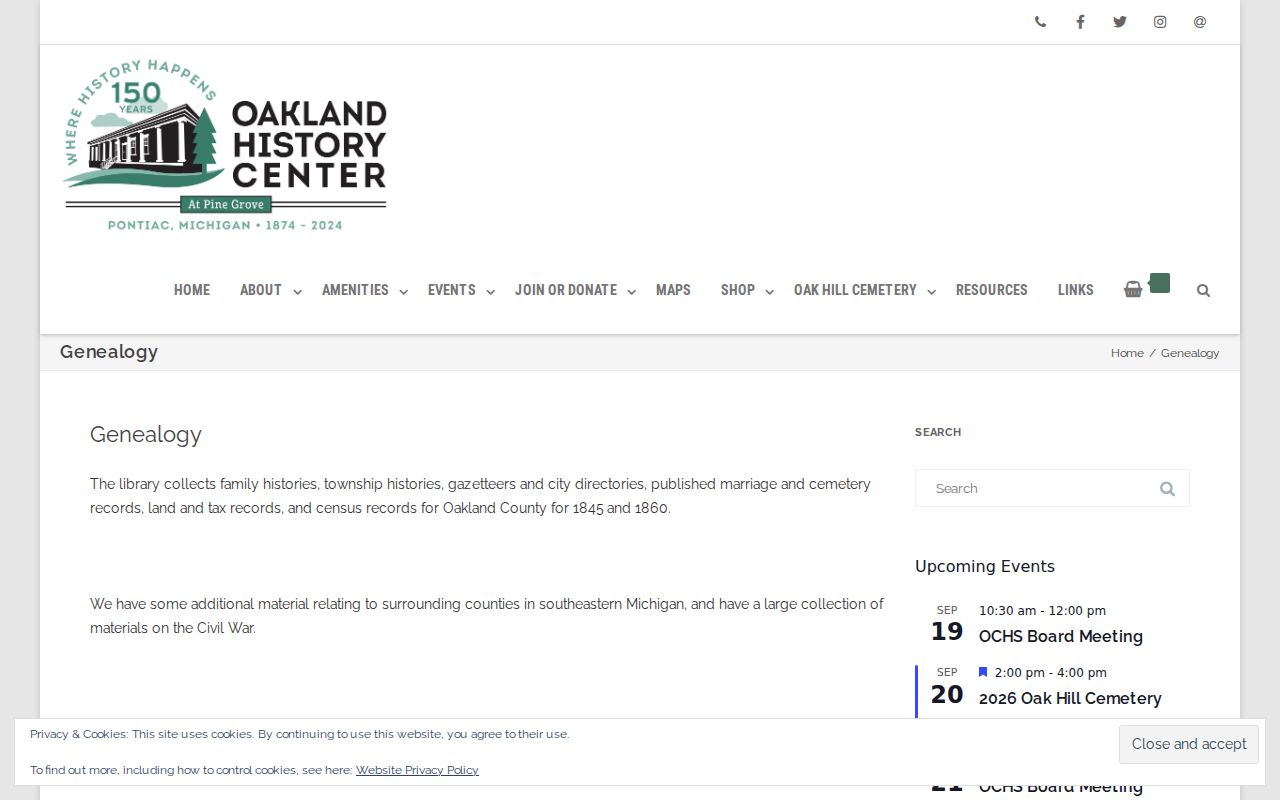
Staff help and the shelf list matter because a closed-stack volume may be the only place a selected Pontiac-area year is available.
The Auburn Hills Public Library database page is another local starting point for library-access resources, including its noted in-library Ancestry access.
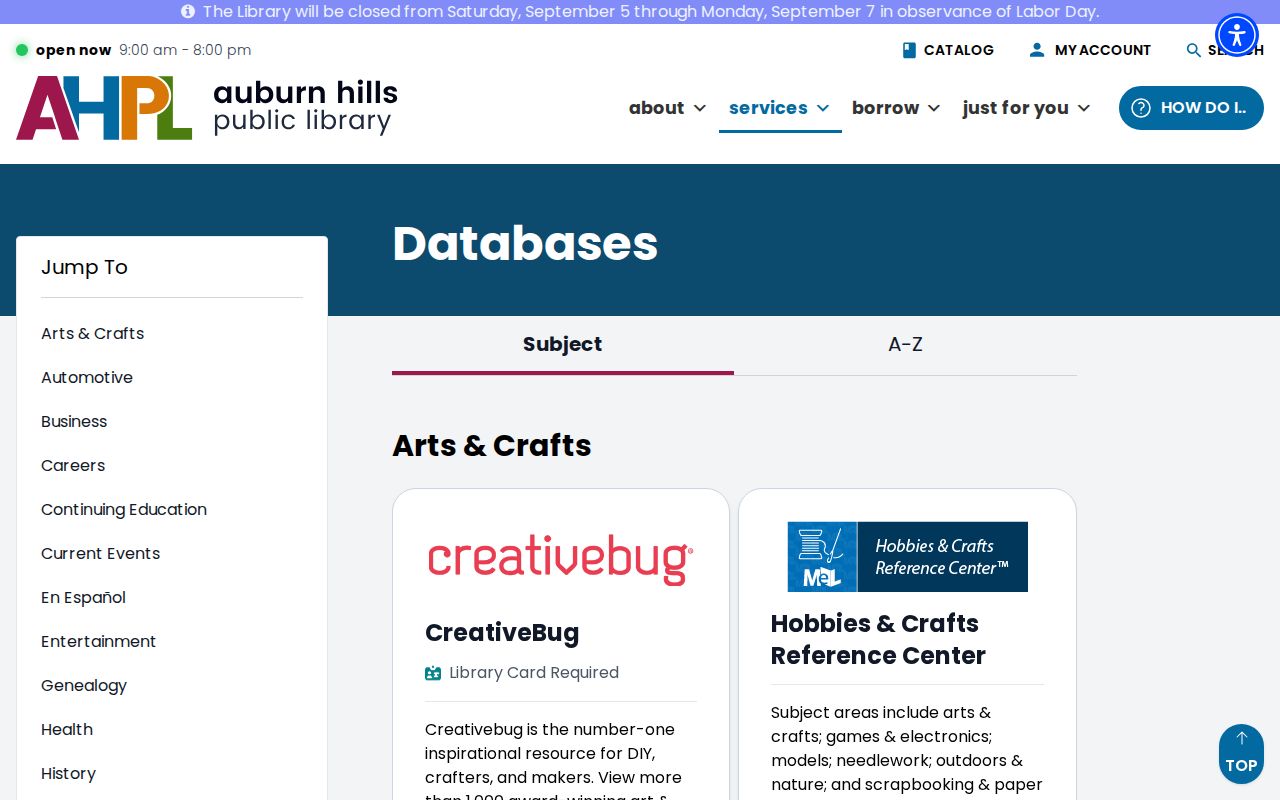
Database search results are leads. A directory page image or an archival volume is the evidence to retain.
Criss-Cross Auburn Hills Directory Volumes
Later directory volumes can reverse the normal lookup. A criss-cross volume is arranged by street and house number, then may identify a resident and telephone key. OCPHS lists North Oakland volumes for 1958 and 1960 and a South Oakland Bresser cross-index for 1967-68. The Library of Congress identifies Pontiac and North Oakland coverage from 1972-1983, but 1974-1975 are missing. That gap is part of the result, not a reason to guess.
The Library of Congress street-address directory guide identifies Pontiac directories for 1954-1956.
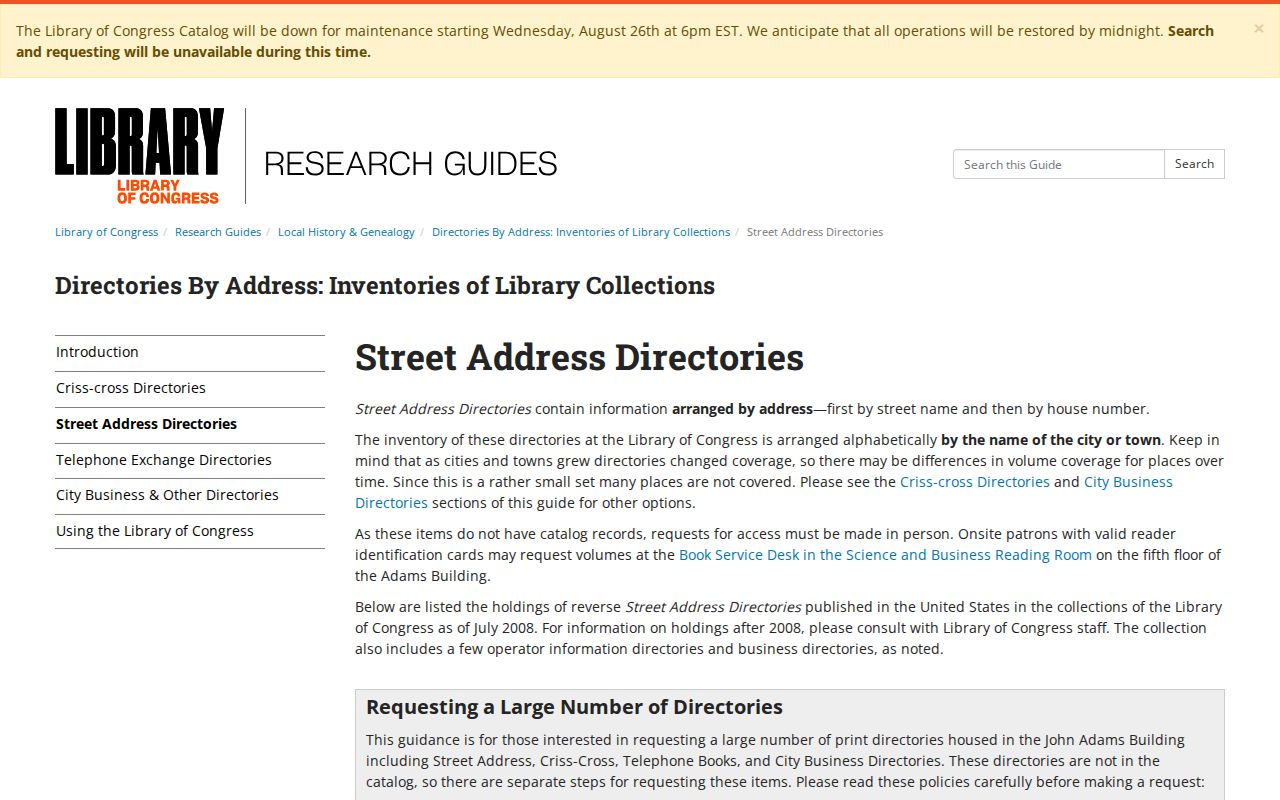
Street organization can locate a household when a surname has been misspelled or the person is listed only in a neighboring locality.
The Library of Congress criss-cross guide documents the reverse-directory coverage and its missing years.
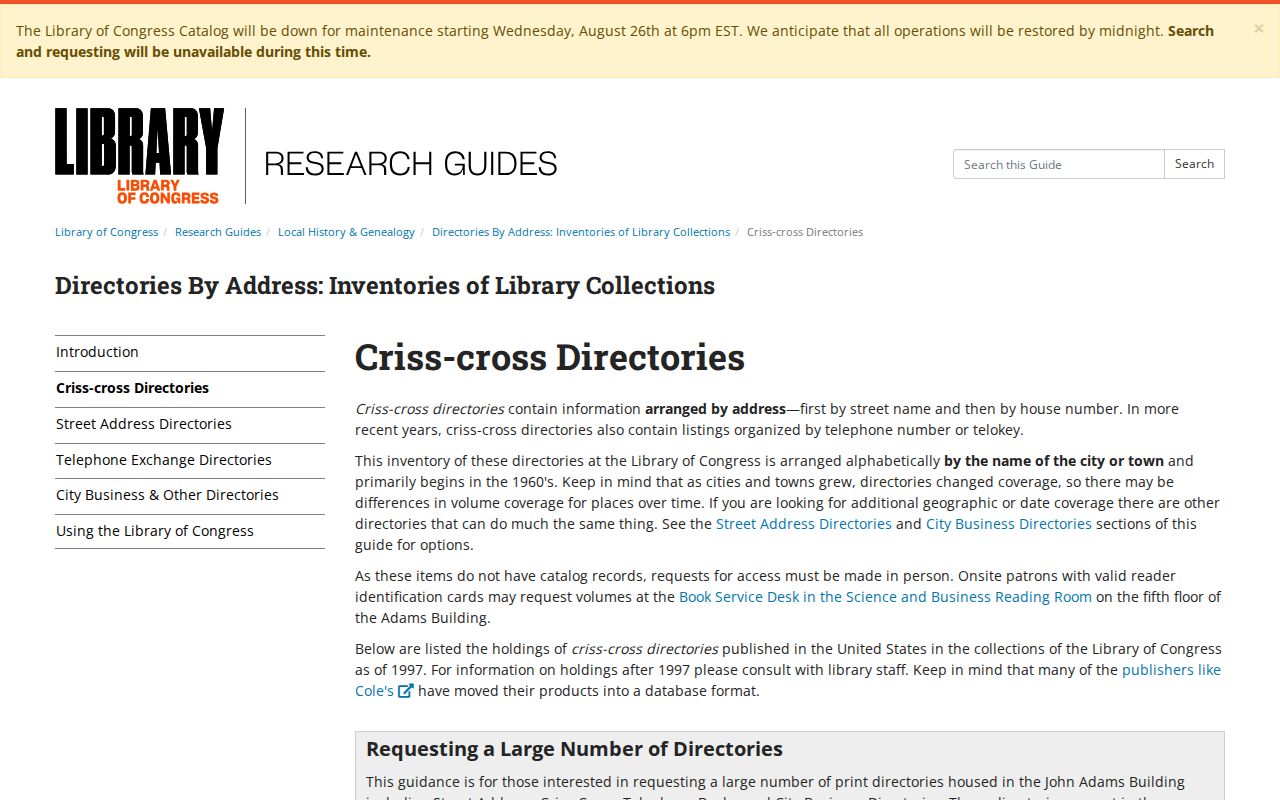
Some Library of Congress material must be consulted at the Adams Building Science and Business Reading Room, so confirm access before relying on a digital search result.
Read an Auburn Hills Directory Entry
Read the volume's abbreviation key before copying an entry. A directory can identify the person printed, a residence or business address, an occupation as printed, a spouse notation, a unit or vacancy, and a page source. It does not prove a relationship, property ownership, or a current address. The HABS record for a Pontiac building demonstrates a 1915 entry pattern with a unit or vacancy, named occupants, and occupations. Those examples belong to that building record, not to present-day Auburn Hills.
| Name | Copy the name and spelling exactly as printed. |
|---|---|
| Address | Keep house number, street, unit, and locality together. |
| Occupation | Transcribe the printed wording without adding an unprinted role. |
| Household notation | Preserve spouse, widow, or residence notation as a clue. |
| Source details | Record directory year, publisher, volume, and page. |
- Criss-cross directory
- A reverse directory that begins with a street and house number, then may lead to an occupant.
- Householder index
- A name-led listing intended to point to a household or address entry in that volume.
- Abbreviation key
- The printed legend that explains the volume's symbols and shortened words; photograph it with the entry.
Note: Keep an interpretation separate from the transcription so later research can test it.
Auburn Hills Directory Timeline
The surviving runs form a discontinuous shelf, not an annual master list. A timeline clarifies which source can reasonably be expected to cover a particular period.
- 1860-61 and 1870-71: Pontiac-Flint directories held by OCPHS provide the earliest listed index leads.
- 1886 to 1915: Pontiac and Oakland County volumes appear in selected years on the OCPHS shelf list.
- 1922 to 1962: Selected Polk's Pontiac City Directory issues continue the name and address trail.
- 1958 to 1983: OCPHS and Library of Congress reverse directories provide address-led access, with the documented 1974-1975 gap.
- 1983 forward: Auburn Hills is the incorporated city name, while older source names remain necessary for a full historical search.
Telephone directories, the 1919 rural-route volume, and the 1930 Greater Pontiac street guide can bridge some gaps, but each uses its own coverage and organization.
Auburn Hills Directory Press Clues
Newspapers can test a directory clue when a household disappears, a street changes, or a relationship needs an independent source. The Library of Congress Pontiac Press record identifies Pontiac Daily Press from 1919-1953, The Pontiac Press from 1953-1972, and The Oakland Press from 1972 forward. OCPHS also maintains obituary card files and scrapbooks.
Search by the newspaper title that matches the date, then preserve the issue date and page with any notice. The Auburn Hills Historical Society archive also identifies local newspaper material among its appointment collections. A notice can lead to a street, family member, civic event, or date, but the directory, parcel, cemetery, census, or official filing should supply the next corroborating record.
Use an obituary to identify a possible relationship, event, or former address, then test it against the directory year, census, deed, cemetery record, or official filing. A notice alone should not settle an identity question.
Trace Auburn Hills Households by Year
Family-history work is strongest when every observation stays tied to a date. Start with the first plausible directory appearance, then follow the spelling and address forward. Pair the address-led result with census and land material rather than treating one printed line as a complete household history. The National Archives says population schedules through 1950 are public, and its 1950 search supports name, location, and enumeration-district work. OCR can miss names, so browsing by district may be needed.
- Search the most likely Pontiac, Auburn Heights, or Auburn Hills directory year and transcribe the full entry.
- Check adjacent available years for a move, different spelling, spouse notation, or changed address.
- Use the criss-cross section when available to test who appears at the same house in that year.
- Pair the directory with the nearest public census and retain the enumeration district or source page.
- Test the dated address against a deed, parcel, obituary, cemetery, or court record only when that record answers the next question.
The National Archives census overview explains the 72-year restriction and the public census span. For modern address-keyed property work, use the Auburn Hills street directory instead of stretching a historical volume beyond its date.
Auburn Hills Records Before 1983
A historical directory is not the only route for an early Auburn Hills question. The Archives of Michigan Oakland County guide identifies original county records and points to material at the Archives of Michigan and Oakland University Archives. Its listed series include local dockets, land-related material, cemetery records, and a 1936-1942 rural-property inventory. Availability is not the same as digitization, and no series should be treated as Auburn Hills-specific without checking the item.
When a directory find needs a modern, one-person check, the Auburn Hills resident lookup uses official current and case-record routes. Keep the historical entry, the source page, and the uncertainty attached to the result.
Note: No authoritative pre-1983 directory titled "Auburn Hills residents" was located, so place-name bridging is essential.