
Finding Auburn Hills Residents
Every resident search starts with one solid clue. A name, a house number, or a family story can lead down several paths. The Auburn Hills residents directory holds all of these paths. Parcel files tie people to land. Local history collections place a household in an earlier era. Court, voter, and vital records each serve narrower purposes. Good results keep the date, place, and source together. Older records here may carry names that predate the modern city. Anyone who wants to find who lives on a street in Auburn Hills should begin with the record that matches the question.
- Search the address in Auburn Hills BS&A or the county map and save the parcel number.
- Use that PIN in the Oakland County Super Index to identify dated instruments and parties.
- For a current registration question, use Michigan Vote or the defined QVF request route, noting what fields remain protected.
- For a past household, compare the directory year with census, newspaper, and local-history material.
- Ask the right custodian for an unavailable record instead of treating a portal miss as proof that no record exists.
Auburn Hills Names Before 1983
The city's own timeline unlocks older resident research. The settlement was Auburn, then Amy in 1880, then Auburn Heights in 1919, all within Pontiac Township's government framework. Auburn Hills incorporated in 1983. So a nineteenth-century directory, tax item, cemetery lead, or map can be locally relevant even when its city field says something else entirely.
Street names need the same time check. The city's Public Square history links the former Auburn Avenue and Principal Street corner to today's Auburn Road and Grey Road. Five Points history records that Joswick was formerly Joyce. Note both versions rather than replacing the historical wording. That habit pays off whenever a directory, deed, or newspaper index ignores a modern street search.
Auburn Hills Resident Records Offices
Different offices hold different pieces of the Auburn Hills residents directory. The city clerk takes municipal FOIA requests. Police records route to a separate division. City Assessing handles local property context. Oakland County bridges land records, mapping, probate, and circuit-court files. State agencies control voter-system access and vital-record eligibility. Pick the right office first, and the request never lands at the wrong counter.
Oakland County Clerk/Register of Deeds
1200 N. Telegraph Road
Pontiac, MI 48341
248-858-0581
Michigan elections route
Registration and QVF guidance
Statewide service
Local clerk supports local questions
The Auburn Hills City Clerk serves as the city's central public-records contact. It handles ordinances, minutes, elections, agreements, and FOIA. Its published contact page is the correct starting point for any municipal record. It does not replace the county recorder or a state vital-record order.
View the Auburn Hills City Clerk records gateway before choosing a municipal request channel.
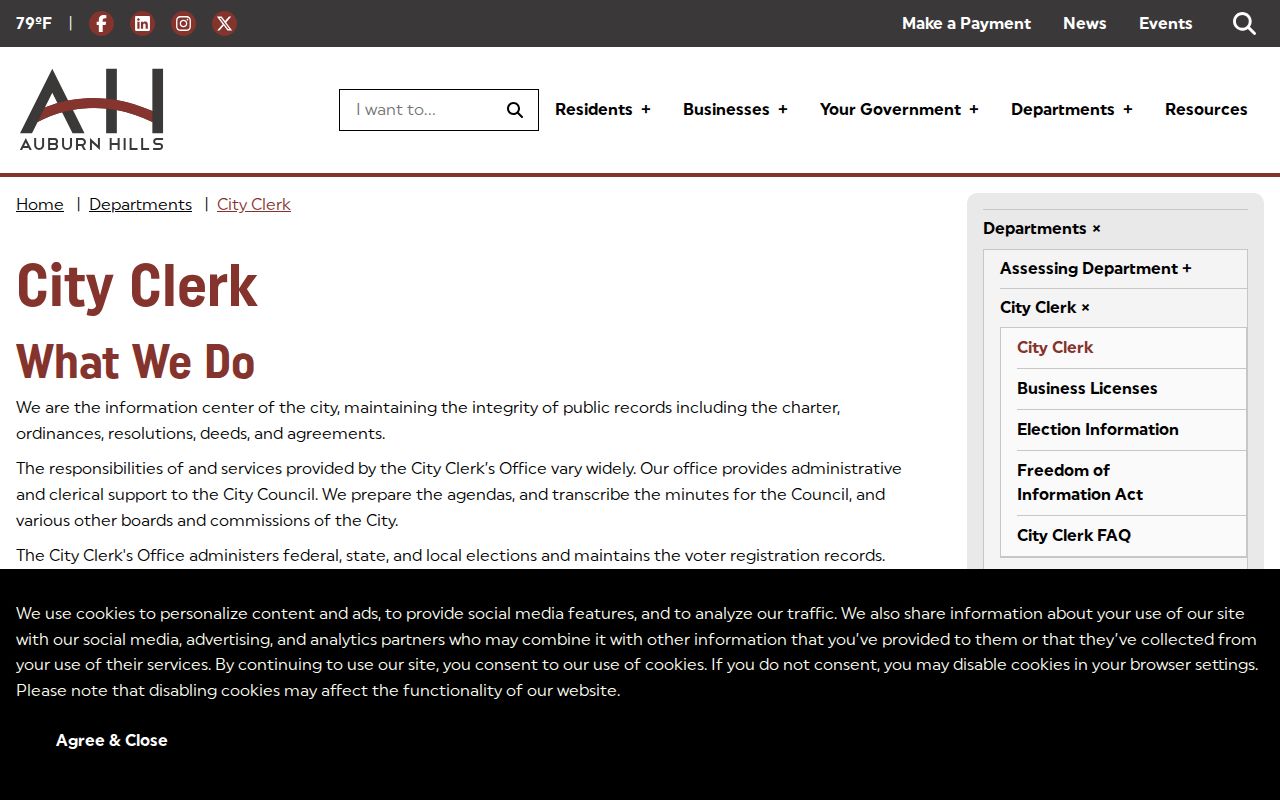
The clerk gateway shows the municipal starting point behind an Auburn Hills residents directory search. Use it for city business. Move to a specialist custodian for land, court, or state registration matters.
Auburn Hills Parcel Search Keys
BS&A accepts an address, owner name, or parcel number. A parcel detail page can expose general property information, a building image or sketch, sale history, and tax context. Permits can appear there as well. The county Property Gateway adds map navigation, property-address and PIN searching, and adjacent parcels. Aerial layers, reports, and print controls round it out. Its help notes a five-character minimum for property-address searching and offers partial and wildcard examples.
| BS&A control | Use in the resident trail | Limit |
|---|---|---|
| Property address | Finds the situs parcel | Keep street formatting as entered |
| Owner name | Finds the current card owner | Does not identify every occupant |
| Parcel number | Links city card, map, and deeds | Use the full key when available |
| Sale history | Shows recorded transfer context | Read instrument type before interpreting a sale |
A parcel is a mapped unit of land, and the PIN is its cross-system key. The mailing address on a tax card can belong to an agent, lender, or former owner. Keep it distinct from the situs address. For a full by-address workflow, follow the Auburn Hills street directory route once the parcel is identified.
- Roll
- A custodian’s organized list or record set, such as a property or voter file.
- Index
- A finding aid that points to a record; it may not include the full document image.
- Parcel
- A defined piece of land linked to a PIN and legal description.
- Criss-cross directory
- A historical directory arranged by street and house number rather than surname.
Oakland Deed Trails for Residents
The Super Index is the county's portal for deeds and land instruments. Its simple search takes a party name, address, PIN, subdivision, or document-type term. Advanced fields add grantor, grantee, recorded or file date, instrument number, document type, subdivision, block, and lot. Results can narrow by document type, recorded year, grantor, or grantee. Guests see indexed information, while document details or downloads may require an account and payment.
A grantor transfers an interest in a recorded instrument; a grantee receives it. Those are land-record roles, not proof of who occupied the building. The county reports online land information back to January 1, 1964. Older material remains an office or microfilm route. The July 2026 Acreage Book migration moves that search into the Super Index, so an older interface reference is not a missing record.
Current Auburn Hills Resident Directories
Labels matter more than volume here. A property roll names an owner of record. A deed index names the parties to an instrument. Michigan's voter tools handle registration questions and public-file access under statutory redactions, while court and licensing portals describe a case or a regulated status. None of them is a master list of everyone in town. The strongest Auburn Hills residents directory search starts by picking the source that actually answers the question at hand.
| Record source | What it can establish | Custodian | Access path |
|---|---|---|---|
| BS&A parcel card | Owner, parcel, situs or mailing distinction | City Assessing | Online or assessor contact |
| Super Index | Grantor, grantee, instrument, date, legal description | County Register of Deeds | Free index; image rules apply |
| Michigan Vote/QVF | Defined registration fields and status | MDOS and local clerk | Lookup or written FOIA file request |
| Court Explorer or probate | Public case role, number, and record path | County courts | Portal, clerk, mail, or counter |
| Library and archive holdings | Dated directory, newspaper, or census clue | OCPHS, library, archives | Shelf, appointment, or in-person research |
A name alone proves very little. Verification takes deliberate work. The Auburn Hills resident lookup route shows how to anchor a name to an address, a date, and an official record instead of trusting a single match.
Auburn Hills Voter Record Limits
Michigan never registers voters by party. Its public voter-file rules hold back protected items, among them driver-license and state-ID data, the month and day of birth, phone, email, signatures, and the last four Social Security digits. Michigan Vote handles current registration and polling guidance. Anything broader requires a written QVF request under FOIA, with a chosen geographic scope and delivery method. The public field list is fixed. It is not a full personal profile. Consult the official Michigan Vote guidance for the current registration route.
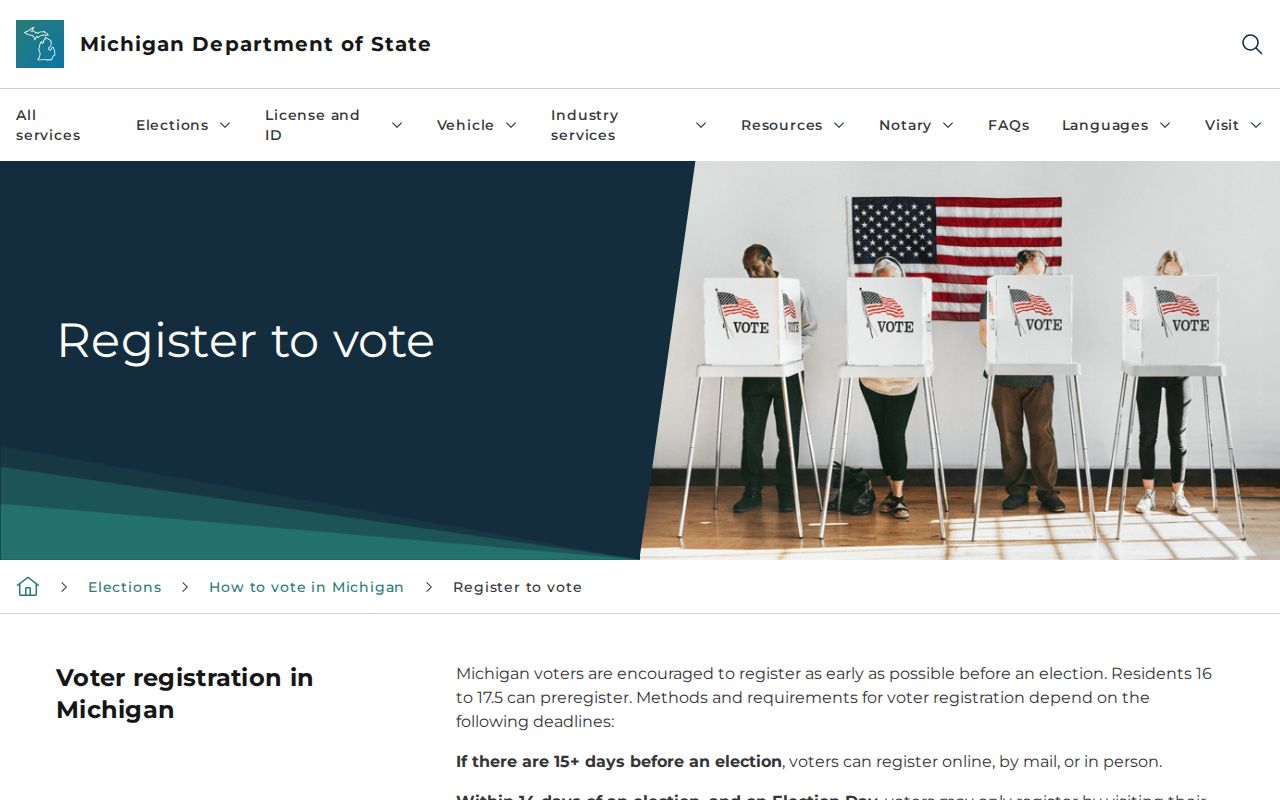
Michigan Vote is the official source shown for any Auburn Hills registration question. It sits naturally beside the QVF redaction rules. A status result should not be stretched into guesses about affiliation, ballot choices, or a whole household. It answers one narrow thing: whether a registration exists and what the public file shows. Note: A voter record can yield a dated registration clue. Its protected fields and access limits still apply.
Auburn Hills Court and Vital Paths
Start with the court and the case number. Auburn Hills matters land locally in 52-3 District Court. Oakland County Court Explorer reaches 6th Circuit material back to the early 1990s. Probate offers a free name search but posts no documents online, so expect a mail request or a courthouse visit. MiCOURT is informational only. It excludes several protected categories. A name hit is never an identity finding by itself. Check the Michigan case-search service for its current notice and exclusions.
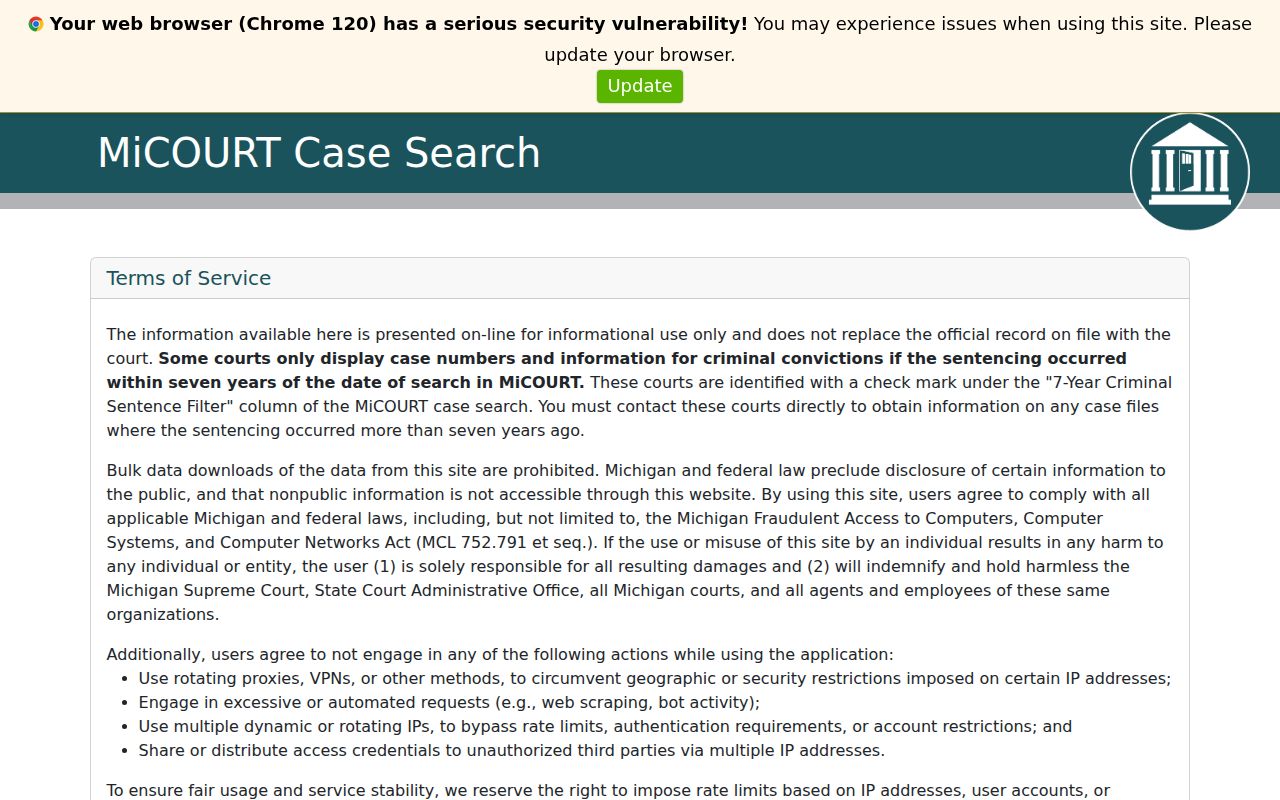
The state case-search service points to a route. That route still has to be confirmed against the proper court file. Keep the court, case number, case type, filing date, and party role together. Respect the public-status limits before deciding a result matters. Vital records run through a different door entirely. MDHHS controls certified statewide orders. Birth access carries eligibility and age rules under Michigan law. Marriage, death, and divorce copies follow separate procedures. They are ordered through the official MDHHS channels rather than city records. Use the MDHHS vital-record order page for current instructions.
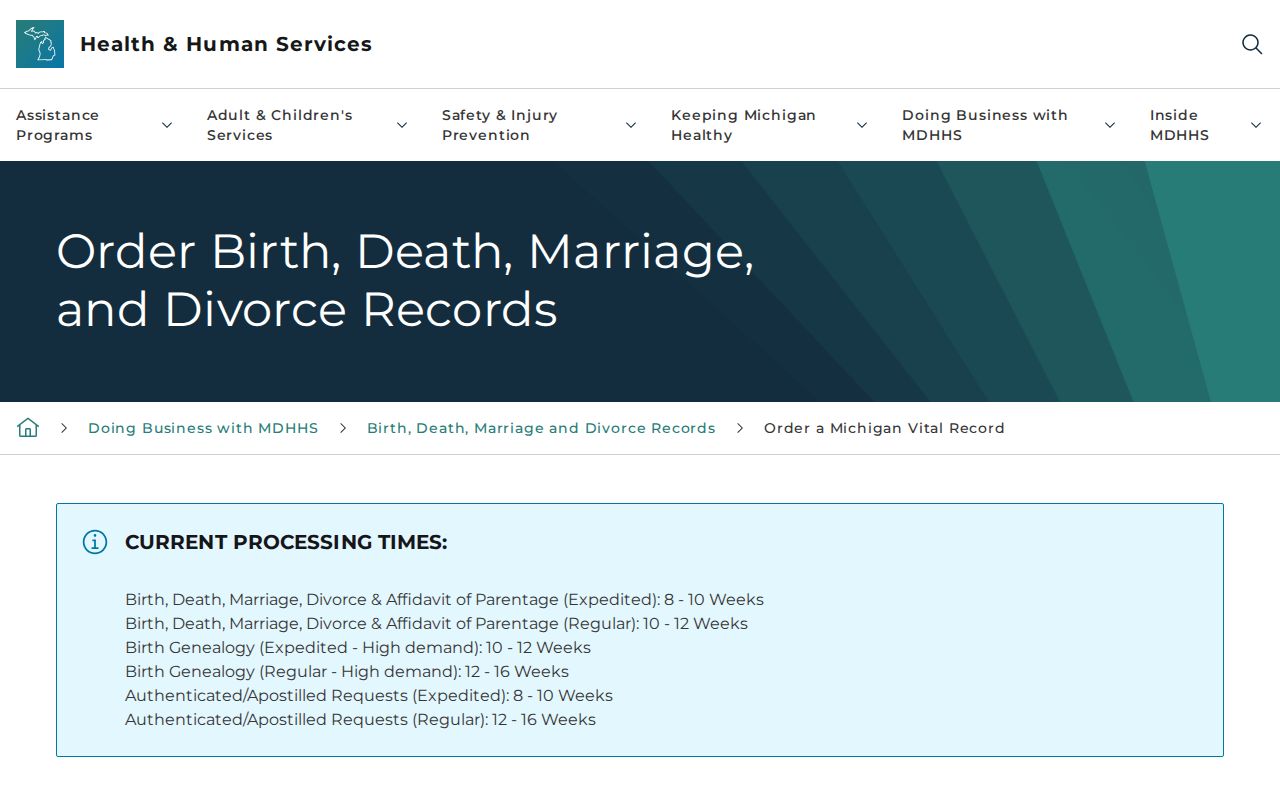
The state order page governs eligibility, payment, and processing. City Hall does not issue these records. Keep a genealogy inquiry separate from a certified-copy order.
Auburn Hills FOIA and Record Requests
A FOIA request is not a deed purchase or a vital-record application. Michigan FOIA is Public Act 442 of 1976, MCL 15.231 et seq. The request must be written and must describe the public record well enough to find. State guidance allows a usual five-business-day response, with a possible written ten-day extension. Narrow the ask. Give dates, a department, and an address, PIN, or case number. Auburn Hills accepts written requests by mail, email, fax, in person, or a city form. City records go through the clerk. Police records sit with the separate Police Records Division. Ask for an existing record. Do not ask an office to certify someone's residence. Do not ask it to build a new data analysis. Read the Auburn Hills FOIA procedure before submitting a city request.
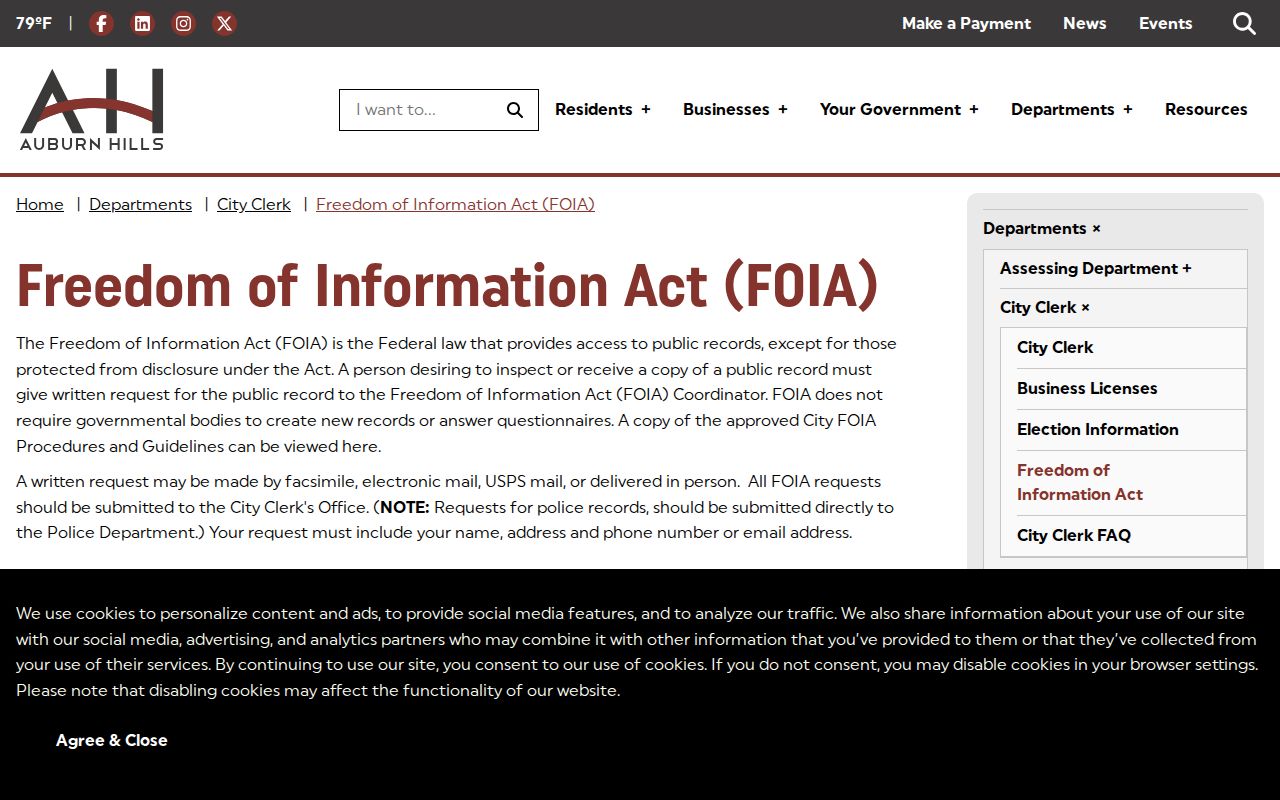
The city FOIA page separates the request channel from the online record systems. It serves as the fallback when a well-defined municipal record is not posted. County and state custodians keep their own procedures.
Historical Auburn Hills Resident Directories
The local historical shelf is really a Pontiac-area shelf. That is precisely why the older names matter. The Oakland History Center at Pine Grove holds Pontiac and Oakland County directories from 1886. It also holds Pontiac volumes spanning 1895 through 1915, and many Polk's Pontiac years from 1922 through 1962. Its 1962 Polk's Home Directory explicitly includes Auburn Heights. The collection also carries a 1919 rural-route directory and a 1930 street guide. It holds North Oakland criss-cross volumes for 1958 and 1960, and a 1967–68 South Oakland cross-index. The Library of Congress lists Pontiac street-address directories for 1954 through 1956. It also lists Pontiac and North Oakland criss-cross coverage from 1972 through 1983, with 1974 and 1975 absent. The OCPHS genealogy room sits at 405 Cesar E. Chavez Avenue in Pontiac and generally posts research hours Tuesday through Thursday. Call first. A printed entry is a dated clue only. Pair it with its volume, page, street form, and an independent source whenever possible.
Auburn Hills History in Records
Old place names are search gold. The city's official timeline starts with Auburn in 1821. It identifies streets laid out in 1826. It also records the Amy and Auburn Heights names. It notes Pontiac Township's role and the civic decisions that produced Auburn Hills. A strong record match may carry an earlier name. That is normal here. A historical entry from Pontiac Township can look like an unrelated hit elsewhere in Michigan unless the place and date are read together.
The Auburn Hills Historical Society keeps newspaper clippings, Pontiac Township tax records, and maps. It also holds material on homes and historic places, school items, and census material from 1830 through 1870. The archive welcomes visitors by appointment and meets at the public library. Its house-history program has traced construction dates, architecture, owner trails, and resident trails. Start there for house history. For present parcel and instrument work, the county recorder and assessor remain the custodians.
Newspapers, cemeteries, and probate files add their own evidence. The Pontiac Press title ran from Pontiac Daily Press to The Pontiac Press. It then became The Oakland Press. An obituary can yield a date or a family tie. Cemetery and probate records have separate custody and privacy limits. Tie every clue to a parcel, census, or deed. That habit keeps an Auburn Hills residents directory search honest. It keeps a single mention from becoming a claim of residence.
Auburn Hills Safety Boundaries
Access has hard limits. Michigan's Address Confidentiality Program provides a substitute address and related protections. It serves eligible people who face serious safety concerns. Voter rolls, court files, vital records, and correctional portals each carry their own redactions or exclusions. None of it licenses copying sensitive fields or publishing a list of private people. Consult the Michigan Address Confidentiality Program for the official rules.
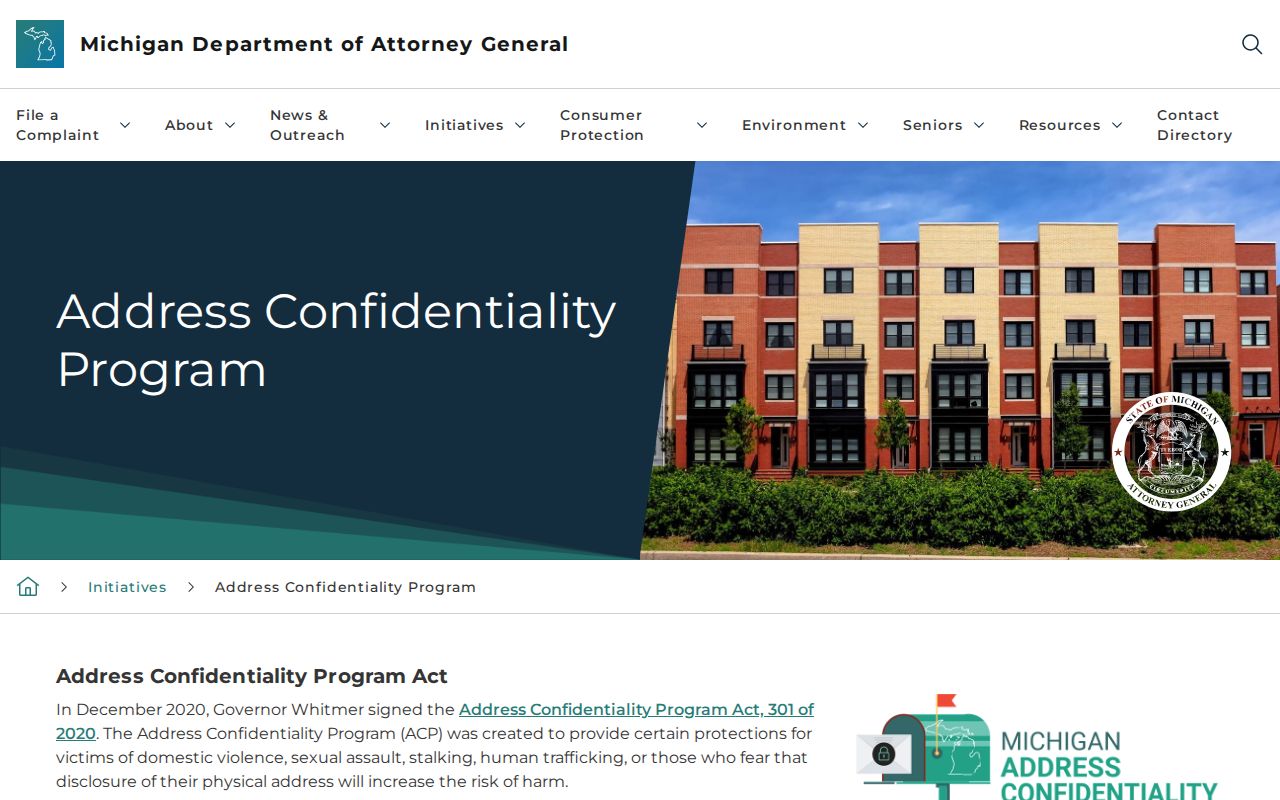
The Attorney General's confidentiality-program page is the proper source for program eligibility and contact guidance. Published limits still matter. An older public record does not erase them.
Auburn Hills Public Safety Records
Public-safety portals are record-specific, not a residents directory. MDOC OTIS covers state supervision rather than local custody, while ICHAT carries a defined Michigan criminal-history scope with exclusions, and the county jail locator can lag. The state registry holds its own public-safety purpose, search fields, and publication limits. Check spelling, jurisdiction, status, and record date first. A match is not a resident lookup. See the Michigan public-safety registry information for its defined search and use rules.
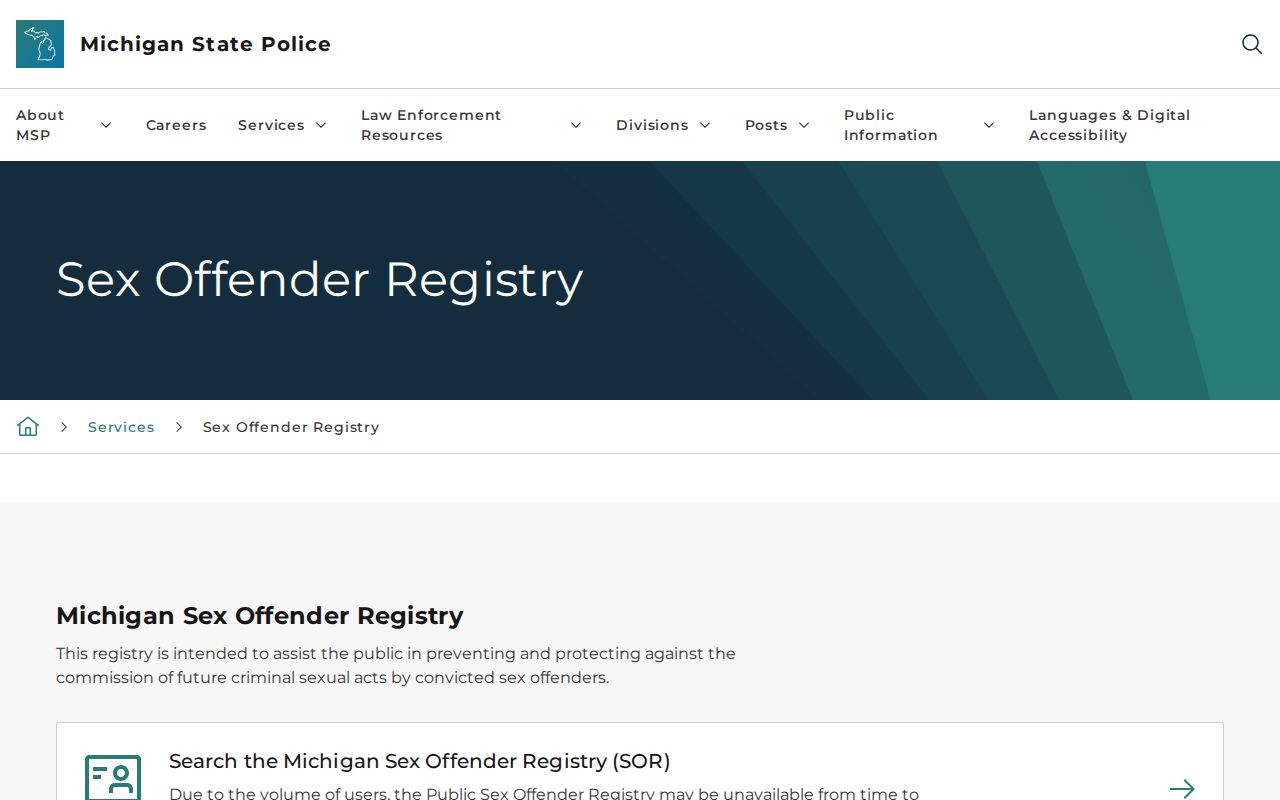
The registry page is an official, purpose-limited source. It does not turn a name or address search into a conclusion about identity, current residence, or a person's legal history. A listing is a starting point. Treat it accordingly.
Note: When a portal points to a court or agency for confirmation, obtain the underlying public record from that custodian before relying on a result.