
Auburn Hills Previous Residents by Era
A backward address trail begins with the source that matches the period. County deed records establish dated land instruments. Printed directories can put a name at a house number in a particular volume. A census is a dated household snapshot. Permits can date work, not necessarily a move. Maps and tax material can explain a property before its present street form. The important local divide is 1983, when Auburn Hills incorporated from land associated with Pontiac Township and Auburn Heights. Older results should retain the historical jurisdiction rather than applying the modern city name to every record.
| Historical source | Years available | Where to use it | Address evidence |
|---|---|---|---|
| Oakland land information | Online to January 1, 1964; county holdings reach earlier | Super Index, then county office or microfilm for older material | Recorded instruments, parties, dates, legal or PIN details, and images where available. |
| OCPHS directories | Runs from 1860–61 through 1962, with volume-specific gaps | Oakland History Center | Name, address, business, and sometimes owner, renter, or occupation clues. |
| Criss-cross volumes | 1958, 1960, 1967–68; 1972–83 with 1974–75 missing | OCPHS and Library of Congress guides | Street and house number leading to a dated occupant or telephone-key clue. |
| Federal census | 1790–1950 public; later schedules remain restricted | National Archives and research partners | Dated household, address, age, birthplace, and other schedule fields. |
| Local archive | 1830–1870 census material, township tax, maps, clippings, and other dated holdings | Auburn Hills Historical Society by appointment | Local context for homes, taxes, names, maps, schools, and newspapers. |
Sources do not all use the same address system. Record the printed street, route, parcel, municipality, and year before attempting to connect two entries.
Backtrack Auburn Hills Deed Transfers
Use the current city parcel card to establish the exact situs address, parcel or PIN, legal description, subdivision or lot wording, visible sale history, and current owner field. Keep a mailing address separate from the situs address. Then search the parcel key in the Oakland County deed Super Index. In a purchase instrument, the buyer is the grantee and the seller is the grantor. The seller’s earlier purchase, the same legal description, or the same PIN can lead to the next recorded link. Check every link for date, instrument type, legal description, parcel split, or combination.
- Open the address in Auburn Hills BS&A and copy the parcel key, situs address, legal text, and sale fields that are displayed.
- Search that PIN or the known grantee in the Super Index, then identify the purchase instrument rather than assuming every listed document is a transfer.
- Record instrument number, recorded date, document type, grantor, grantee, legal description, and image status for that link.
- Search the earlier seller as a grantee, or use the legal description when names and parcel identifiers change.
- When the online trail reaches its 1964 limit, request the older deed, microfilm, plat, Acreage Book, or legal-description material from the county custodian.
- Grantor
- The party conveying an interest in the recorded instrument.
- Grantee
- The party receiving that recorded interest.
- Chain of title
- A dated sequence of recorded instruments for the same land, checked for breaks and changes.
- Legal description
- The land description in an instrument, often more durable than a street address when numbering or parcel boundaries change.
Note: A deed proves a recorded instrument and party role, while a separate dated source is needed to support an occupancy conclusion.
Older Auburn Hills Address Names
Past residents can disappear from a modern-name search because the municipal name did not exist for much of the record trail. Auburn was settled early, became Amy in 1880, and became Auburn Heights in 1919. Pontiac Township supplied much of the surrounding administrative setting before incorporation in 1983. Search Auburn, Amy, Auburn Heights, and Pontiac Township along with the modern city name, then check the record’s year against the jurisdiction. This is the local bridge that prevents a true older record from being discarded as a mismatch.
Street text needs the same care. The city’s Public Square history identifies the old Auburn Avenue and Principal Street corner as today’s Auburn Road and Grey Road. Its Five Points history records Joswick as formerly Joyce. These are verified examples, not a full renaming index. When the street itself is unclear, keep the original text, search both forms, compare the legal description, and ask the city or county custodian for the relevant plat or planning material.
Auburn Hills Previous Residents Before 1964
Oakland County’s online land-record information reaches back to January 1, 1964, but the county reports earlier holdings. The online boundary is an access limit, not proof that the older land record vanished. For pre-1964 research, take the last verified online instrument, its legal description, party names, and any liber/page or reception detail to the Register of Deeds. Older material may require office, microfilm, archival, plat, survey, remonumentation, or Acreage Book work. In July 2026, the county began moving Acreage Book Search into the Super Index, an interface change that does not alter the historical title sequence.
The PACER access and pricing page shown below is an assigned federal-court reference. Federal docket access can be a narrow corroboration route when a specific federal filing is already known, but it is not an address-history index and cannot establish who lived in an Auburn Hills house.
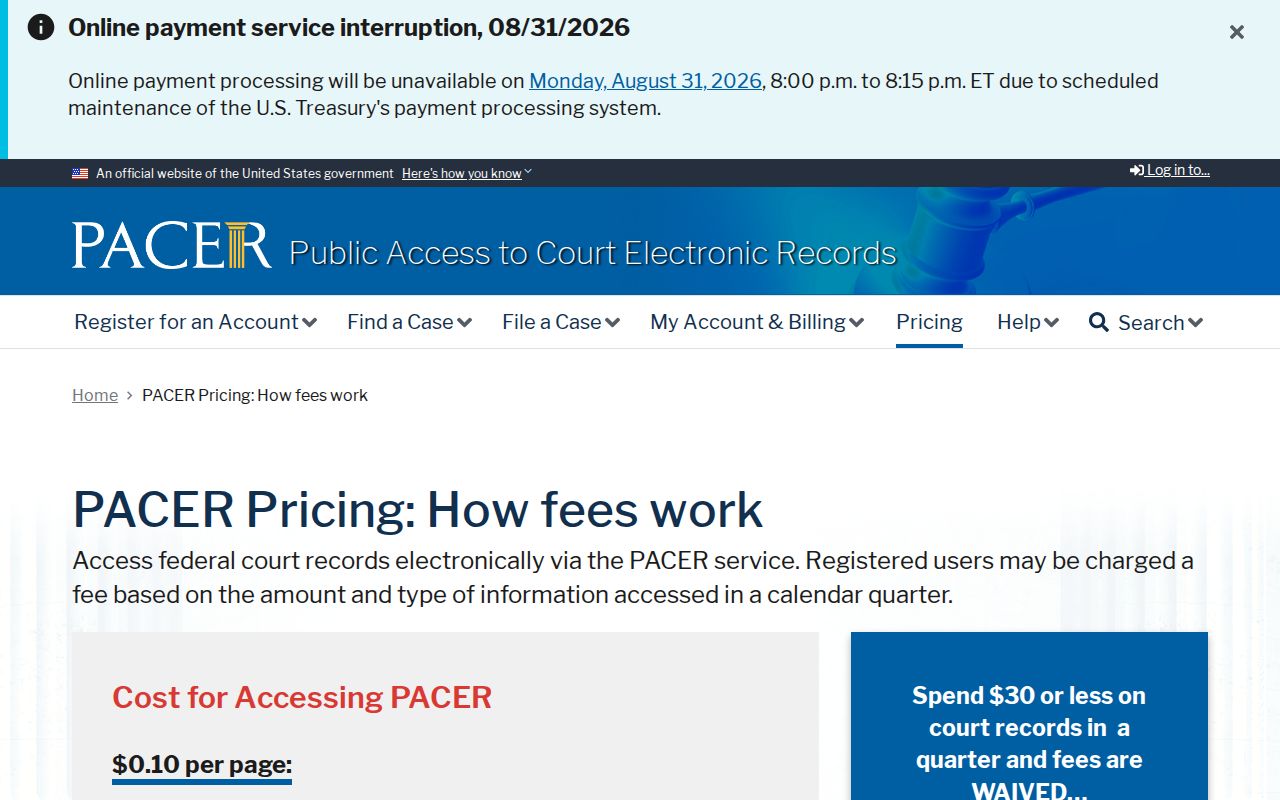
Use a court record only for its case-specific, dated purpose. Keep it separate from the parcel and household evidence in the address timeline.
Auburn Hills Past Residents in Directories
Directories are the occupancy layer for a past-residents question. The Oakland History Center’s shelf list identifies Pontiac and Oakland County volumes from the nineteenth century through the twentieth century, including Polk’s Pontiac runs, a 1919 rural-route directory, a 1930 street guide, telephone directories, and reverse volumes. The Library of Congress identifies Pontiac street-address coverage for 1954 through 1956, plus Pontiac and North Oakland criss-cross coverage from 1972 through 1983, except 1974 and 1975. A criss-cross entry starts with the street and number, which makes it especially useful after the deed trail supplies a historic address form.
The directory volumes themselves are discussed on the Auburn Hills city directory page. For a backward chain, pull only the matching years and record the volume title, publisher, printed address, person, role, and page. A missing entry can reflect an absent volume, spelling, route-based organization, a changed road, or a different household arrangement. It is not by itself evidence that no one was present.
Pair Auburn Hills Census Households
The National Archives census guide confirms that the latest public federal population schedule is 1950 under the 72-year restriction. Census records can provide a household snapshot with details that vary by year, including street address, age, birthplace, marital status, occupation, and property-related information. They remain historical records, not current-resident sources. When indexing misses a name, the 1950 search service supports place and Enumeration District work, so a known address and a directory year can guide manual browsing.
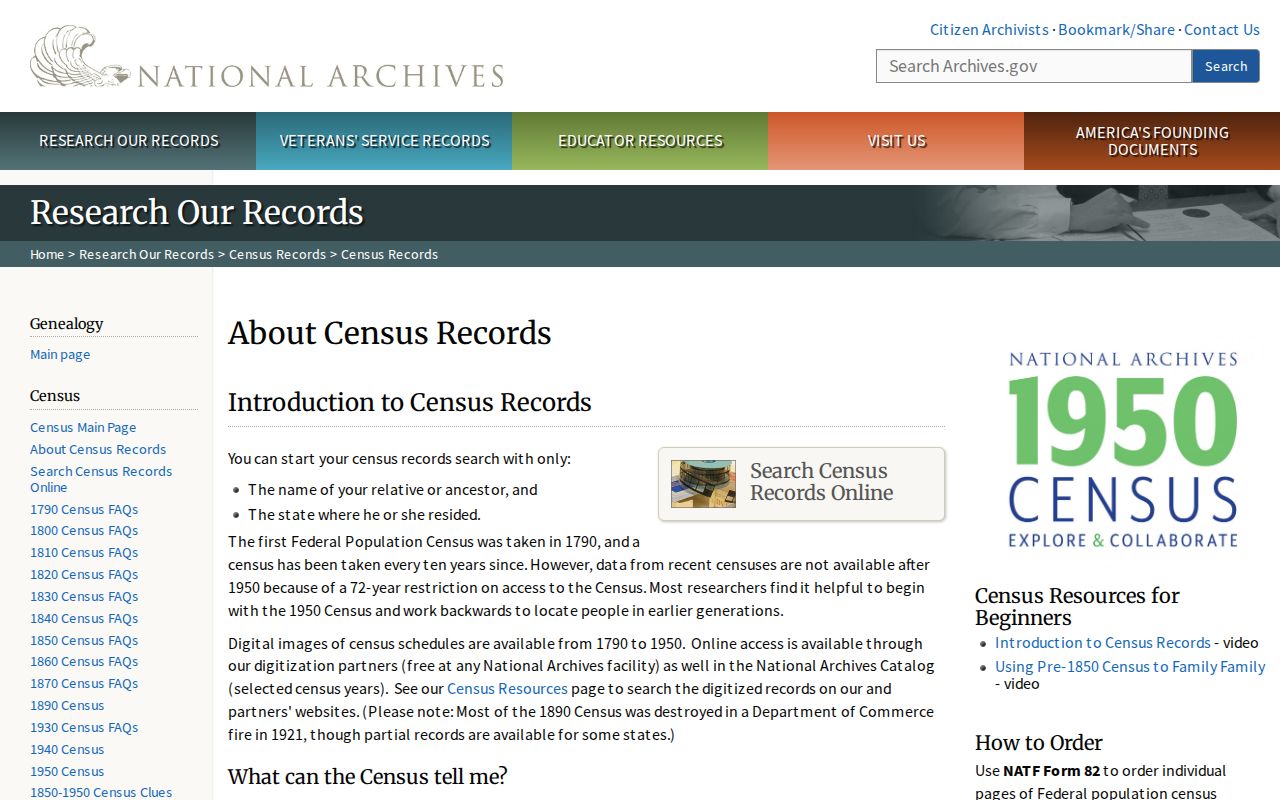
The census source should be cited by schedule year, location, and page or image reference. Use its household evidence to test a directory clue, rather than treating either source as a complete address history.
- Choose the directory or criss-cross volume nearest to the suspected period and capture its exact address form.
- Locate the nearest public census year, then search by name and place or browse the Enumeration District when OCR fails.
- Compare house number, household members, municipality wording, and date before connecting the two sources.
- Use the deed or parcel timeline to test whether the land description and address still point to the same property.
Auburn Hills House History Sources
The Auburn Hills Historical Society offers a locally focused archive by appointment. Its listed material includes newspaper clippings, Pontiac Township tax records, maps, school material, information on homes and buildings, 1830–1870 census material, and historic artifacts. The local collection is valuable for context when a house sits outside the reach of a standard directory or when a road has a former name. A society source is not a title determination, so compare it with the county legal record and cite its date or archive description.
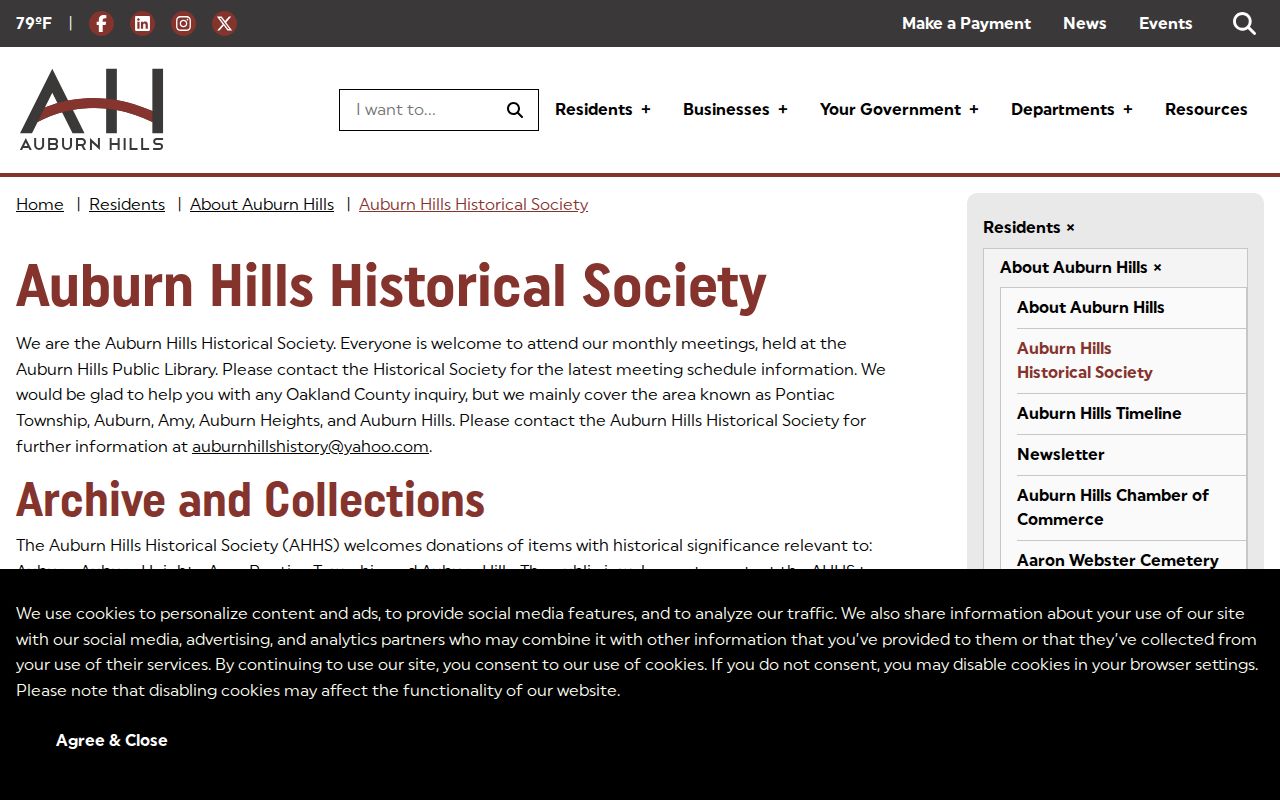
The archive image points to the appointment-based local-history layer. Record whether an item supports a home, a tax reference, a map location, a newspaper mention, or a person clue.
The society’s house-history program notice also describes a local method centered on construction date, architectural style, records, owners, and residents. That distinction matters: a construction event, a deed, and a directory entry belong in separate columns of the research log.
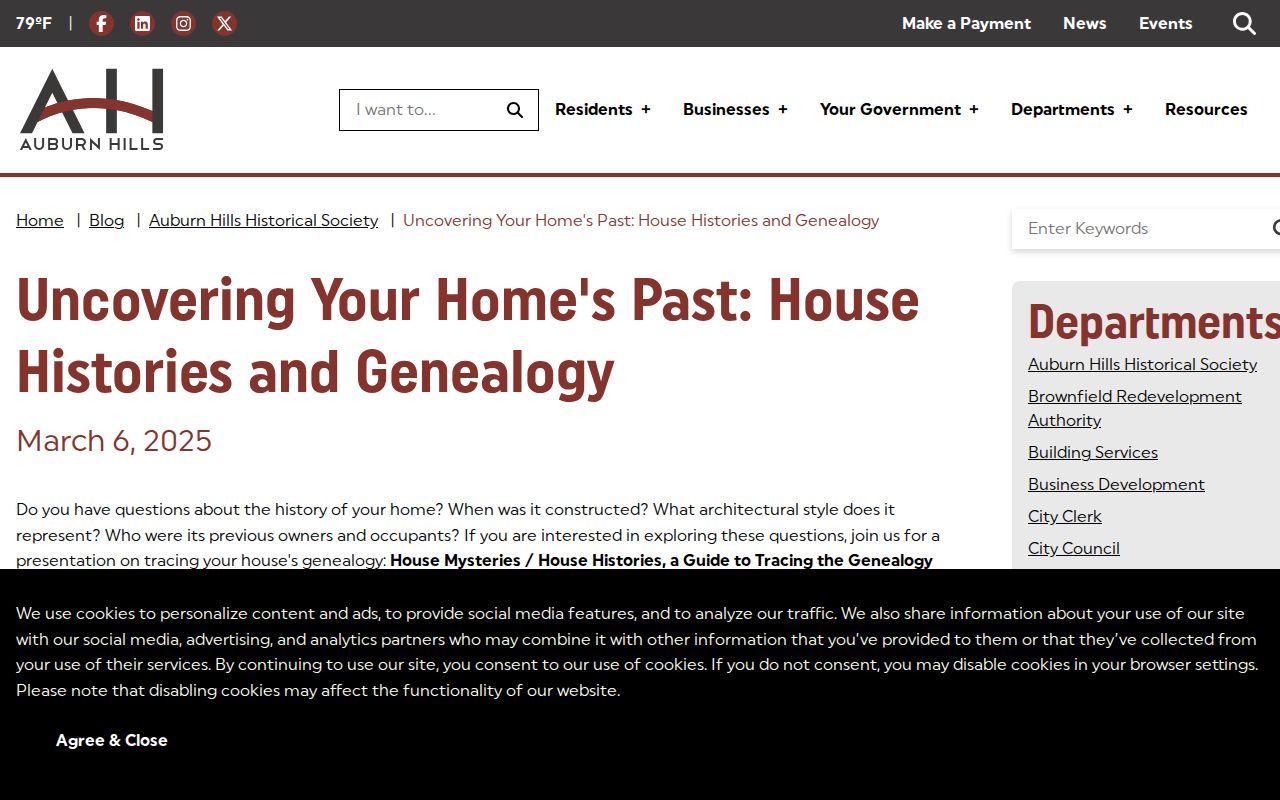
The program material is a practical local pointer for organizing a house history. It does not replace a county title search or create a complete list of past residents.
Auburn Hills Previous Residents Trail Endpoints
Newspapers, obituaries, cemetery material, and probate may close a historical address trail. The Library of Congress identifies the Pontiac Daily Press from 1919 to 1953, the Pontiac Press from 1953 to 1972, and the Oakland Press from 1972 forward. OCPHS also holds obituary cards and scrapbooks. An obituary can supply a date, relationship, or former-address clue, but it still needs a source title and date plus correlation with the address record. Probate can identify an estate, fiduciary, heirs, and filing dates through the county’s public case route, while protected material remains unavailable.
Sanborn maps provide a different kind of address evidence. Pontiac sheets are listed for 1888, 1898, 1909, 1919, 1924, and 1950, but a rural Auburn Township or Pontiac Township parcel may lie beyond a sheet. Verify the edition and coverage before using a map to date a structure or describe a property.
Note: End each historical chain with its last verified source boundary, such as a recorded deed, directory year, census year, obituary, or probate file.
Auburn Hills Previous Residents Limits
Past-resident research is strongest when it names the evidence without overstating it. A parcel owner may not be an occupant. A directory entry is dated and may use a historic address form. A census is one date’s household snapshot. A burial is not proof of residence at the cemetery address. A court or obituary reference can add context but does not establish a current address for anyone. When a record is missing, state the gap, test historical city and street names, and use the responsible archive or custodian rather than filling the space with an unsupported result.
Michigan’s Address Confidentiality Program protects eligible people with substitute-address procedures. A protected record is a boundary, not a puzzle to solve. Keep only the necessary source detail and verify uncertain facts with the office that holds the underlying record.