
Finding Auburn Hills Residents
Start with the fact you can tie to a date. An Auburn Hills address belongs first in the city BS&A property search or the Oakland County Property Gateway. A parcel number, also called a PIN, then links the address to the map and to land instruments. For an older household, begin with the printed name of the place and year. Auburn Hills became a city in 1983, so an earlier entry can sit under Auburn, Amy, Auburn Heights, or Pontiac Township. A residents directory result is strongest when those older labels stay in the search.
Each record answers a narrow question. An assessor card can show an owner of record and the situs address, which is the location of the land. A deed index supplies parties to a recorded instrument. A directory or census can place someone at an address on a particular date. None of those sources proves every person currently in a household. Preserve the source title, date, role, and any gap before reaching a conclusion.
- Search the address in Auburn Hills BS&A or the county map and save the parcel number.
- Use that PIN in the Oakland County Super Index to identify dated instruments and parties.
- For a current registration question, use Michigan Vote or the defined QVF request route, noting what fields remain protected.
- For a past household, compare the directory year with census, newspaper, and local-history material.
- Ask the right custodian for an unavailable record instead of treating a portal miss as proof that no record exists.
Auburn Hills Names Before 1983
The city timeline gives the key to older resident research. The settlement was called Auburn, then Amy in 1880 and Auburn Heights in 1919, while Pontiac Township supplied the surrounding government framework. Auburn Hills incorporated in 1983. A nineteenth-century directory, tax item, cemetery lead, or map may therefore be locally relevant even though its city field does not say Auburn Hills.
Street text also needs a time check. The city’s Public Square history connects the former Auburn Avenue and Principal Street corner to today’s Auburn Road and Grey Road. Five Points history records that Joswick was formerly Joyce. Keep both versions in notes, rather than replacing the historical wording. This is particularly useful when a directory, deed, or newspaper index does not return a modern street search.
Auburn Hills Resident Records Offices
City Hall, Oakland County, and state offices keep different parts of the Auburn Hills residents directory. The city clerk receives municipal FOIA requests and directs police records to a separate division. City Assessing handles local property context. Oakland County is the bridge for land records, mapping, probate, and circuit-court files. State agencies control voter-system access and vital-record eligibility. Choosing the office first saves a request from going to the wrong counter.
Oakland County Clerk/Register of Deeds
1200 N. Telegraph Road
Pontiac, MI 48341
248-858-0581
Michigan elections route
Registration and QVF guidance
Statewide service
Local clerk supports local questions
The Auburn Hills City Clerk is the city’s central public-records contact for ordinances, minutes, elections, agreements, and FOIA. Its published contact page is the right starting point for a municipal record, not a substitute for the county recorder or a state vital-record order.
View the Auburn Hills City Clerk records gateway before choosing the municipal request channel.
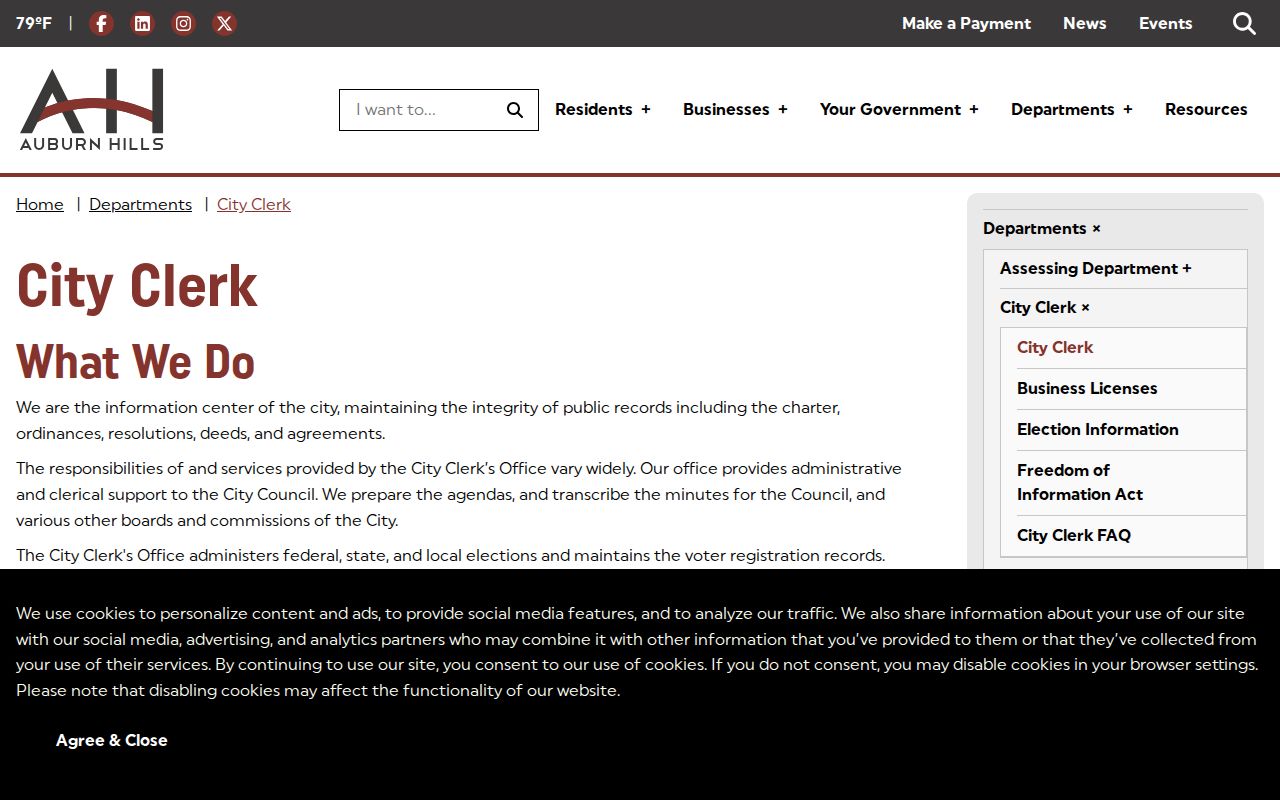
The City Clerk gateway shows the municipal starting point behind an Auburn Hills residents directory search. Use it when the requested record concerns city business, then move to the specialist custodian when the subject is land, court, or state registration.
Auburn Hills Parcel Search Keys
BS&A accepts an address, owner name, or parcel number. Its parcel detail can expose general property information, a building image or sketch, sale history, tax context, and permits when available. The county Property Gateway adds map navigation, property-address and PIN searching, adjacent parcels, aerial layers, reports, and print controls. Its help documents a five-character minimum for property-address searching and provides partial and wildcard examples.
| BS&A control | Use in the resident trail | Limit |
|---|---|---|
| Property address | Finds the situs parcel | Keep street formatting as entered |
| Owner name | Finds the current card owner | Does not identify every occupant |
| Parcel number | Links city card, map, and deeds | Use the full key when available |
| Sale history | Shows recorded transfer context | Read instrument type before interpreting a sale |
A parcel is a mapped unit of land. The PIN is its cross-system key. The mailing address on a tax card can belong to an agent, lender, or former owner, so it must remain distinct from the situs address. For a full by-address workflow, use the Auburn Hills street directory route after the parcel is identified.
- Roll
- A custodian’s organized list or record set, such as a property or voter file.
- Index
- A finding aid that points to a record; it may not include the full document image.
- Parcel
- A defined piece of land linked to a PIN and legal description.
- Criss-cross directory
- A historical directory arranged by street and house number rather than surname.
Oakland Deed Trails for Residents
The Super Index is the county’s deed and land-instrument portal. Its simple search accepts a party name, address, PIN, subdivision, or document-type term. Advanced fields include grantor, grantee, recorded or file date, instrument number, document type, subdivision, block, and lot. Search results can be narrowed by document type, recorded year, grantor, or grantee. Indexed information is available to a guest, while document details or downloads can require an account and payment.
A grantor transfers an interest in a recorded instrument, while a grantee receives it. That describes a land-record role, not who occupied the building. The county reports online land information back to January 1, 1964; its older material remains an office or microfilm route. The July 2026 Acreage Book migration sends that search into the Super Index, so an older interface reference should not be treated as a missing record.
Current Auburn Hills Resident Directories
Current sources are useful only when their labels stay attached. The property roll identifies an owner of record. A deed index identifies parties to an instrument. Michigan’s voter tools address registration and public-file access, with statutory redactions. Court and licensing portals describe a party, case, or regulated status, not a universal list of city residents. A good Auburn Hills residents directory search selects the source that can answer the exact question.
| Record source | What it can establish | Custodian | Access path |
|---|---|---|---|
| BS&A parcel card | Owner, parcel, situs or mailing distinction | City Assessing | Online or assessor contact |
| Super Index | Grantor, grantee, instrument, date, legal description | County Register of Deeds | Free index; image rules apply |
| Michigan Vote/QVF | Defined registration fields and status | MDOS and local clerk | Lookup or written FOIA file request |
| Court Explorer or probate | Public case role, number, and record path | County courts | Portal, clerk, mail, or counter |
| Library and archive holdings | Dated directory, newspaper, or census clue | OCPHS, library, archives | Shelf, appointment, or in-person research |
A direct name question needs deliberate verification. The Auburn Hills resident lookup route explains how to anchor a name to an address, date, and official record rather than relying on a name-only match.
Auburn Hills Voter Record Limits
Michigan does not register voters by party. Its public voter-file rules withhold protected items, including driver-license or state-ID data, month and day of birth, phone, email, signatures, and the last four Social Security digits. Michigan Vote serves current registration and polling guidance. A broader QVF request is a written FOIA process that selects a geographic scope and delivery method. The public field list is defined, not a complete personal profile.
Review the official Michigan Vote guidance for the current registration route.
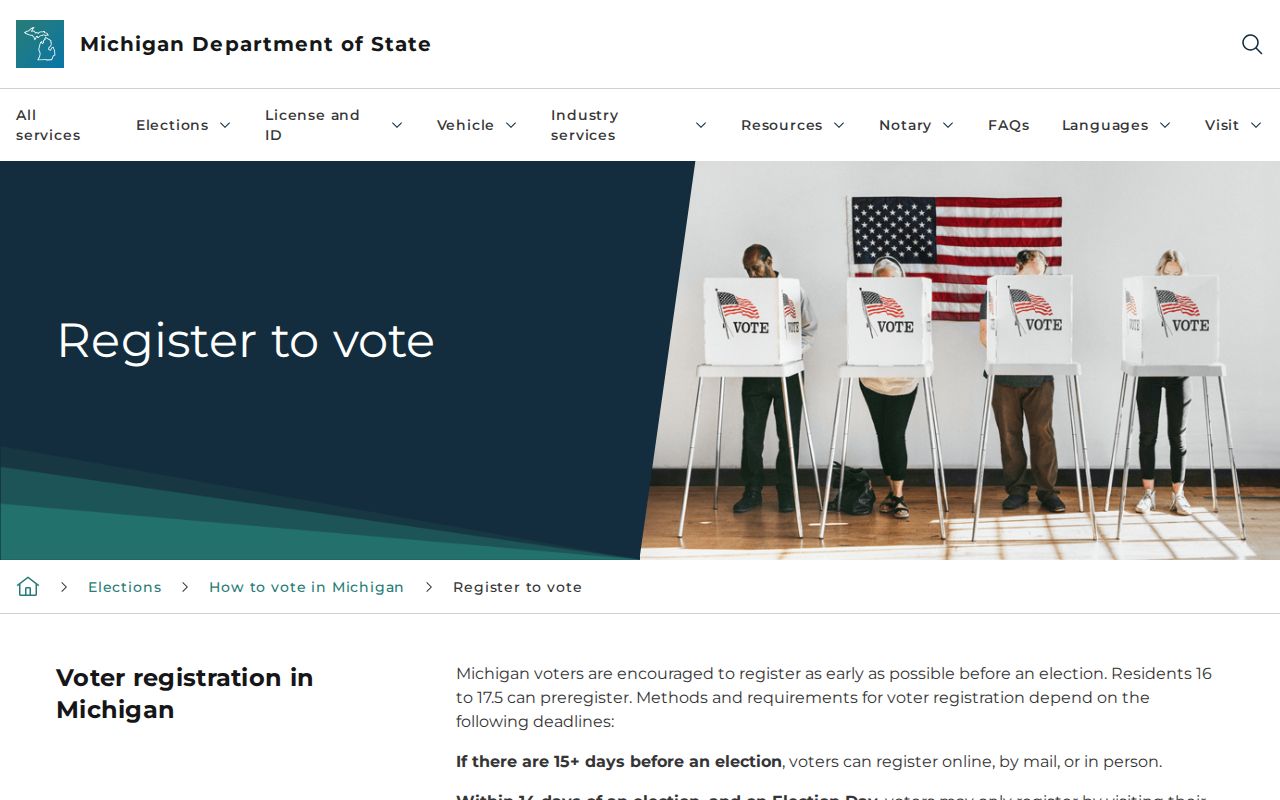
Michigan Vote is the official source pictured for an Auburn Hills registration question. It belongs beside the QVF redaction rules because a voter status result should not be expanded into assumptions about affiliation, ballot choices, or a full household.
Note: A voter record can provide a dated registration clue, but its protected fields and public-access limits remain in force.
Auburn Hills Court and Vital Paths
For a public court matter, begin with the court and case number. Auburn Hills is served locally by 52-3 District Court, while Oakland County Court Explorer covers 6th Circuit material back to the early 1990s. Probate offers a free name search but no online documents, so a specific mail request or courthouse visit may be needed. MiCOURT is informational and excludes multiple protected categories. A name hit alone is not an identity finding.
Check the Michigan case-search service for its current information notice and exclusions.
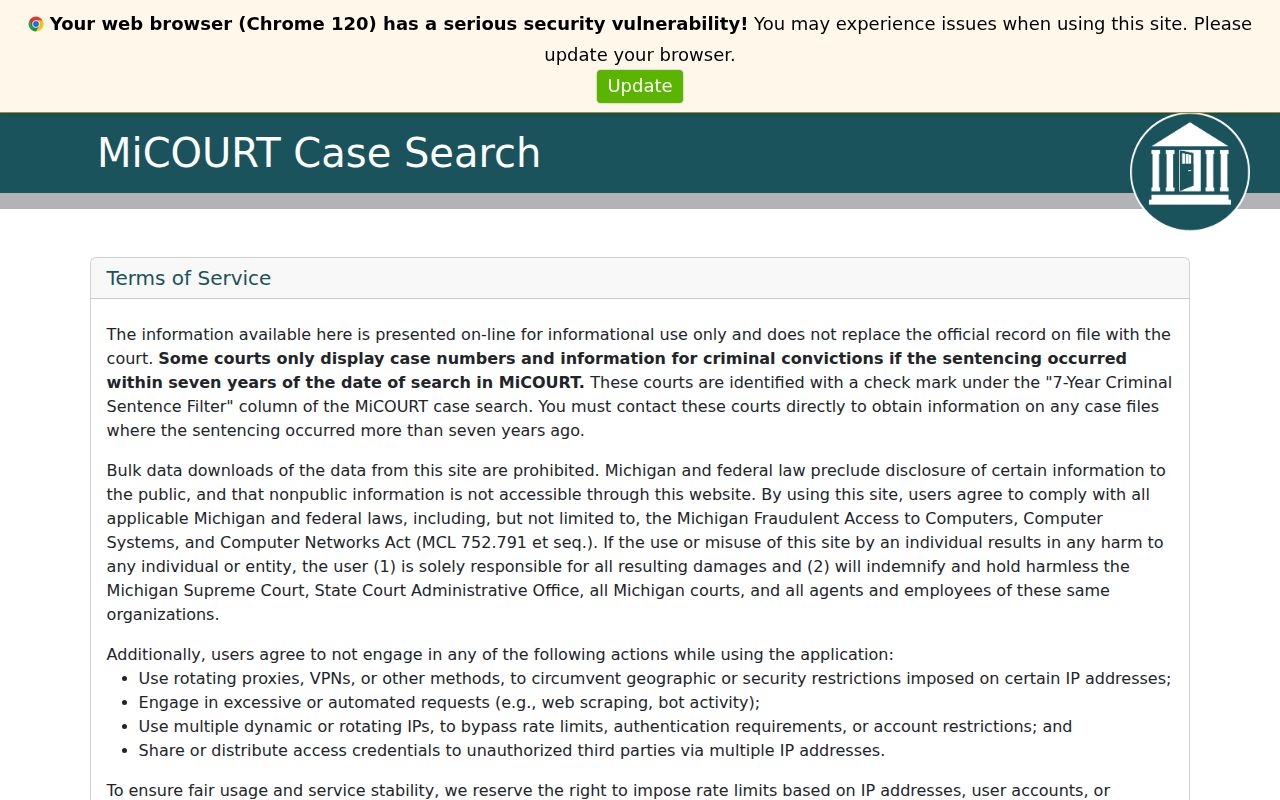
The Michigan court-search capture illustrates a route that must be checked against the proper court file. Retain the court, case number, case type, filing date, party role, and public-status limits before treating a result as relevant.
MDHHS controls certified statewide vital-record orders. Birth access has eligibility and age rules under Michigan law, while marriage, death, and divorce copies use separate procedures. Orders can be made through the official channels listed by MDHHS, not through city records.
Use the MDHHS vital-record order page for current instructions.
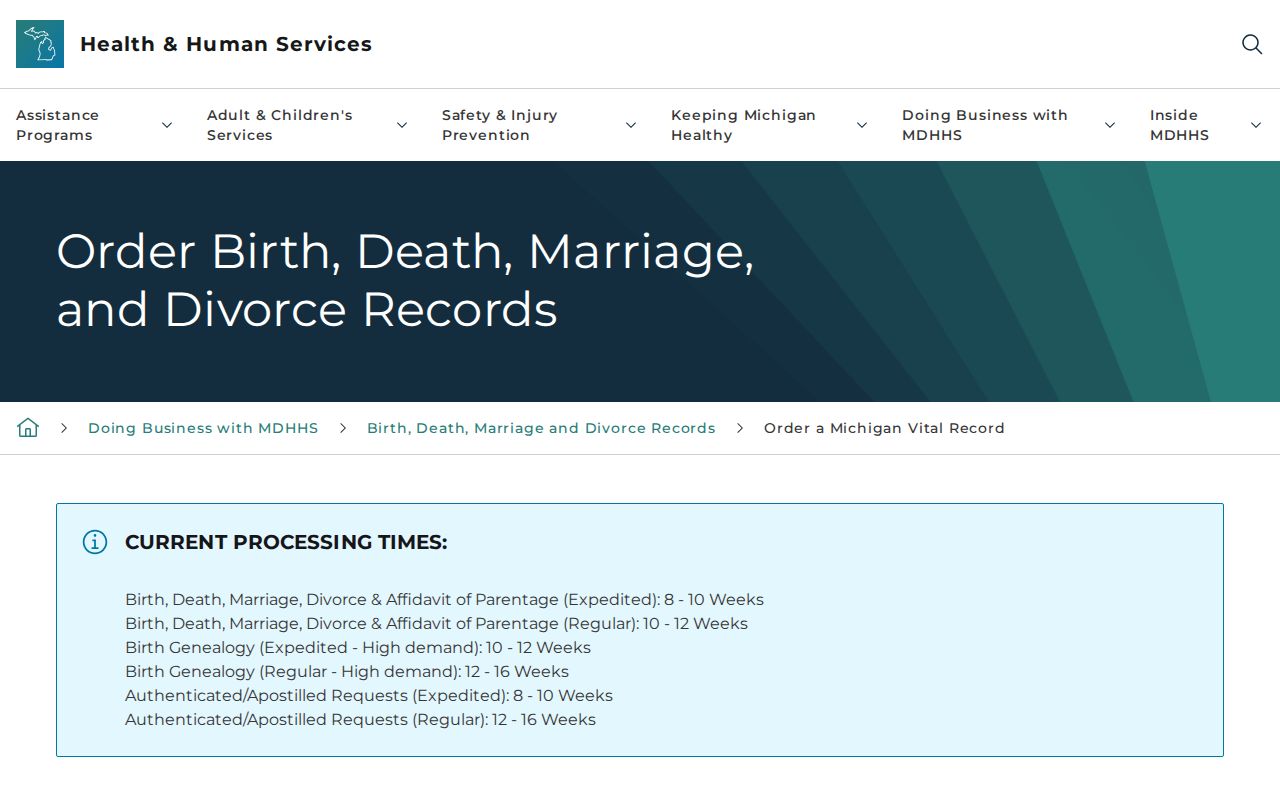
The state vital-record order page is the source for current eligibility, payment, and processing instructions. City Hall does not issue these records, and a genealogy request should not be confused with a certified-copy order.
Auburn Hills FOIA and Record Requests
Michigan Freedom of Information Act requests are not the same as a deed purchase or a vital-record application. Michigan FOIA is Public Act 442 of 1976, MCL 15.231 et seq. A request must be written and sufficiently describe the public record. The state guidance describes a usual five-business-day response period and a possible written ten-business-day extension. Narrow dates, a department, and an address, PIN, or case number make the request easier to search.
The Auburn Hills procedure allows written requests by mail, email, fax, in person, or a city form. City records go through the clerk, while police records use the separate Police Records Division. Ask for an existing record, not for an office to certify a person’s residence or create a new data analysis.
Read the Auburn Hills FOIA procedure before submitting a city request.
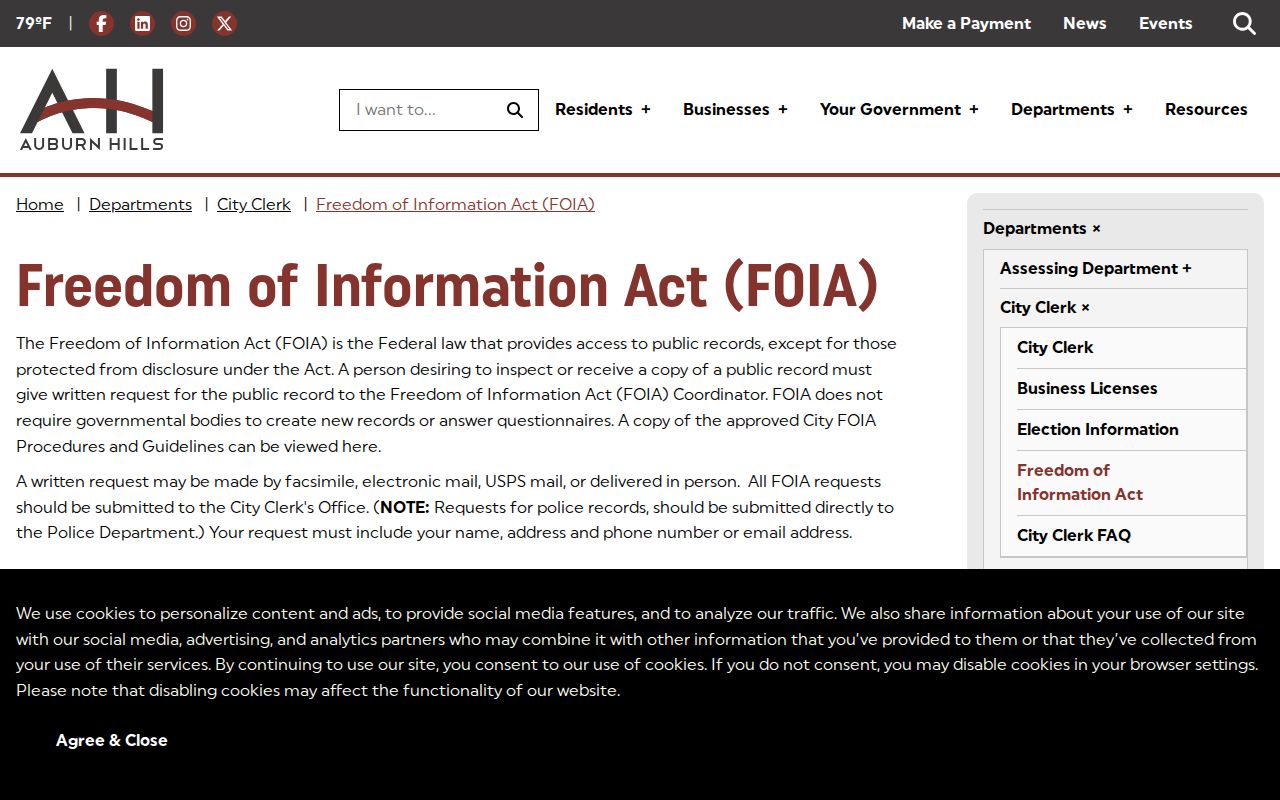
The city FOIA page shown here distinguishes the request channel from online record systems. It is the fallback when a well-defined municipal record is not posted, while county and state custodians retain their own procedures.
Historical Auburn Hills Resident Directories
The local historical shelf is primarily a Pontiac-area shelf, which is exactly why the older names matter. The Oakland History Center at Pine Grove holds Pontiac and Oakland County directories from 1886, Pontiac volumes from 1895 through 1915, and many Polk’s Pontiac directory years from 1922 through 1962. Its 1962 Polk’s Home Directory explicitly includes Auburn Heights. The collection also lists a 1919 rural-route directory, a 1930 street guide, North Oakland criss-cross volumes for 1958 and 1960, and a 1967–68 South Oakland cross-index.
The Library of Congress identifies Pontiac street-address directories for 1954 through 1956 and Pontiac/North Oakland criss-cross coverage for 1972 through 1983, with 1974 and 1975 missing. The OCPHS genealogy room is at 405 Cesar E. Chavez Avenue in Pontiac and generally posts Tuesday through Thursday research hours, with a request to call first. A printed entry is a dated clue, so pair it with its volume, page, street form, and an independent source when possible.
Auburn Hills History in Records
Local history supplies practical search terms. The official city timeline begins with Auburn in 1821 and identifies streets laid out in 1826. It records the later Amy and Auburn Heights names, Pontiac Township’s role, and the civic decisions that produced Auburn Hills. Those changes explain why the strongest record match may carry an earlier place name. They also help separate a local historical entry from an unrelated result elsewhere in Michigan.
The Auburn Hills Historical Society holds newspaper clippings, Pontiac Township tax records, maps, material on homes and historic places, school items, and census material from 1830 through 1870. It offers archive appointments and meets at the public library. Its house-history program has addressed construction dates, architecture, owner trails, and resident trails. These are research leads, not title conclusions. The county recorder and assessor remain the custodians for present parcel and instrument work.
Newspapers, cemeteries, and probate files add different kinds of evidence. The Pontiac Press title sequence runs from Pontiac Daily Press to The Pontiac Press and then The Oakland Press. An obituary can provide a date or relationship clue, while a cemetery or probate record has its own custody and privacy boundaries. Pairing each clue with a parcel, directory, census, or official file keeps an Auburn Hills residents directory search from turning a single mention into a claim of residence.
Auburn Hills Safety Boundaries
Records access has hard limits. Michigan’s Address Confidentiality Program provides a substitute address and related protections for eligible people who face serious safety concerns. Public voter data, court files, vital records, and correctional portals each have separate redactions or exclusions. A public index does not license copying sensitive fields or publishing a list of private people.
Consult the Michigan Address Confidentiality Program for the official program rules.
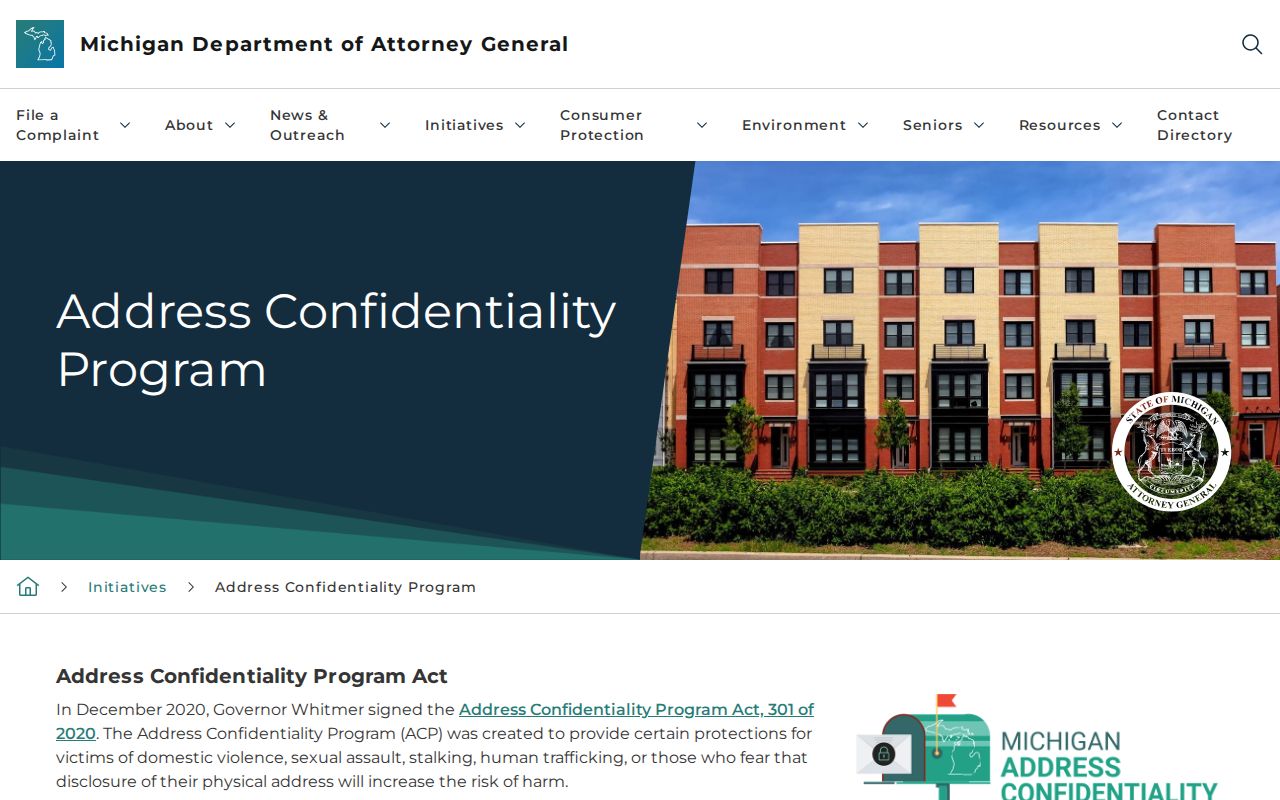
The Attorney General’s confidentiality-program page is the proper source for program eligibility and contact guidance. Its existence is a reminder to preserve published limits, even when an address appears in another dated public record.
Auburn Hills Public Safety Records
Public-safety portals are record-specific, not another residents directory. The county jail locator can lag, MDOC OTIS covers state supervision rather than local custody, and ICHAT has defined Michigan criminal-history scope and exclusions. The state registry has its own public-safety purpose, search fields, and publication limits. A result must be checked for spelling, jurisdiction, status, and record date before it is discussed.
See the Michigan public-safety registry information for its defined search and use rules.
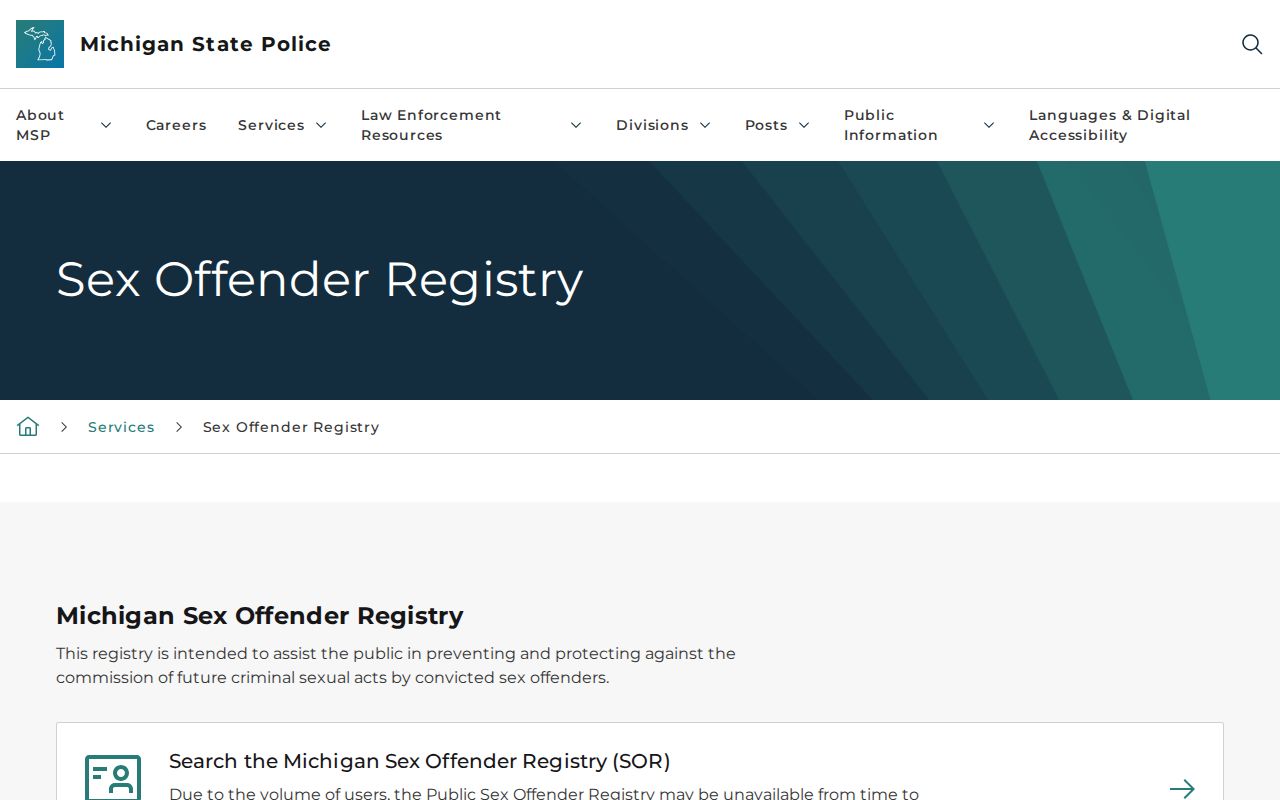
The state registry information page is shown as an official, purpose-limited source. It does not turn a name or address search into a conclusion about identity, current residence, or a person’s legal history.
Note: When a portal points to a court or agency for confirmation, obtain the underlying public record from that custodian before relying on a result.